Choosing the right room acoustics, seating & cables for a theater can get confusing when two listings are both called cables but solve different jobs. The useful first cut is simple: are you carrying audio from an amplifier to speakers, or video from a source to a distant projector? Start with the signal path, not the cable's headline.
Quick verdict
These cables are not interchangeable. Choose the Install Link 16 AWG Speaker Wire Cable for stereo, car, or home theater speaker wiring. Its double-conductor stranded construction, CCA material, and raw ends are suited to an audio run that you will route and terminate yourself.
Choose the Cable Leader 50ft 8K Fiber Optic HDMI 2.1 Cable when the job is carrying video between a source and a distant display. Its active optical design, HDMI 2.1 format, and stated projector and long-run use make the purpose much more specific.
The deciding difference is function: one carries speaker audio, while the other carries HDMI video. The Cable Leader also costs $70.39 more than the Install Link, so the added spend makes sense only when your setup calls for that video connection.
Listed-price and role comparison
| Cable | Listed price | Key role clues |
|---|---|---|
| Install Link 16 AWG Speaker Wire | $28.60 | 100 feet; CCA; raw ends |
| Cable Leader 50ft 8K Fiber Optic HDMI 2.1 | $98.99 | 50ft; 48Gbps; CL3 in-wall |
Where each cable wins
- Install Link wins for speaker-focused builds. Its description names home theater and audio use, while the stranded construction and polarity identification address the practical needs of speaker wiring. The limitation is that a buyer seeking a projector lead would be choosing a cable described for audio rather than HDMI video.
- Cable Leader wins for long HDMI connections. The description specifically addresses a distant display and explains that the active optics draw power directly from the HDMI port without an external adapter. Its limitation is just as clear: its connection format is aimed at source-to-display video, not individual speaker wiring.
Product notes
16 AWG Gauge Speaker Wire Cable Stereo, Car or Home Theater, CCA (100 Feet
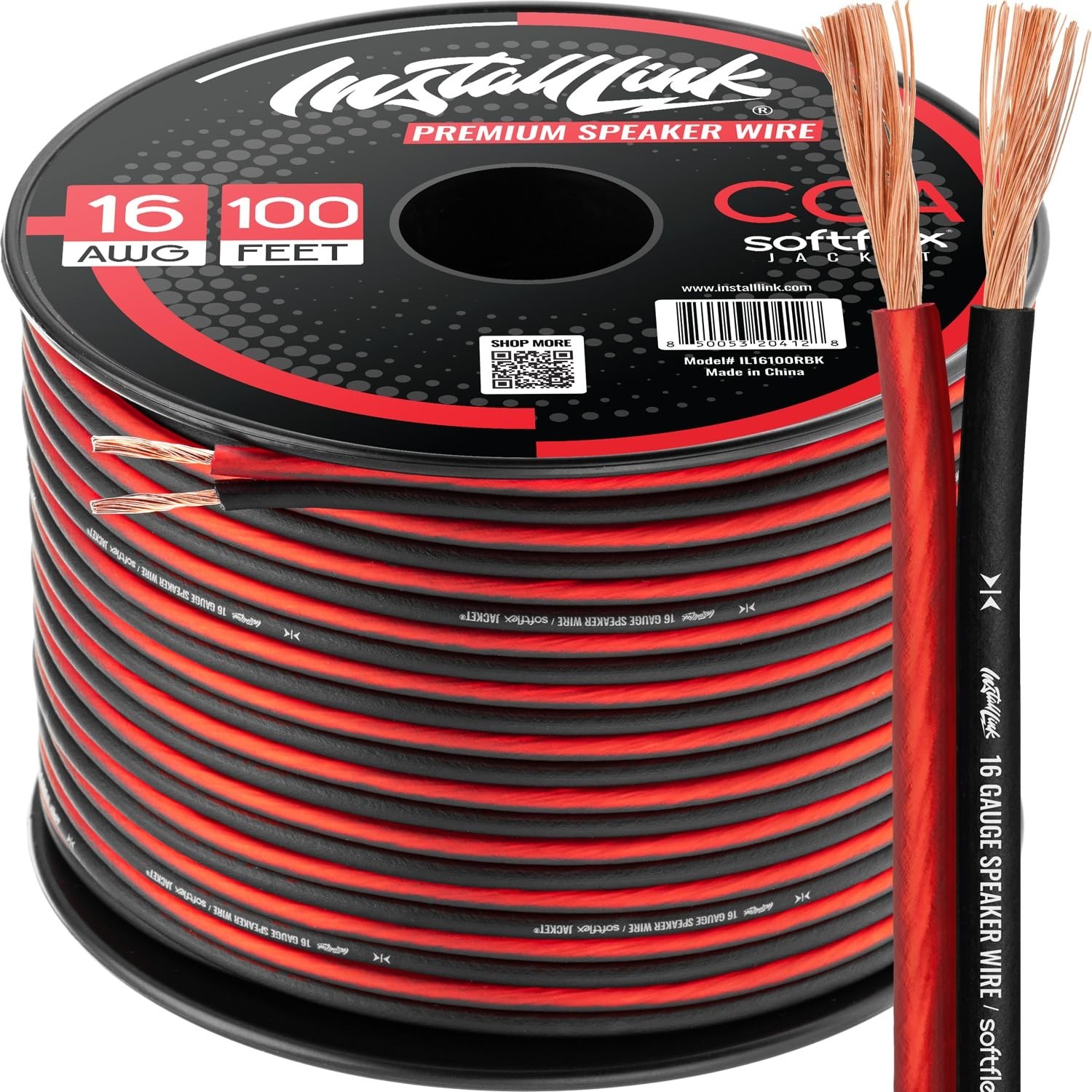
The Install Link cable makes the clearer choice when the run is for speakers rather than a display. Its title identifies stereo, car, and home theater use, while the description specifies a double-conductor stranded design, 100 feet, and 16 gauge. CCA construction and raw, connector-free ends also suit a custom audio run, and the description calls out flexibility and easy stripping. The limitation is equally concrete: it is speaker wire, not a video connection, so it does not address a projector's HDMI signal path. At $28.60, it also sits apart from the HDMI cable's role and price. Choose the Install Link cable when your speaker-wiring plan needs a long spool and connector-free termination.
50ft 8K Fiber Optic HDMI 2.1 Cable, 48Gbps, for Projector & Long Runs, CL3 In
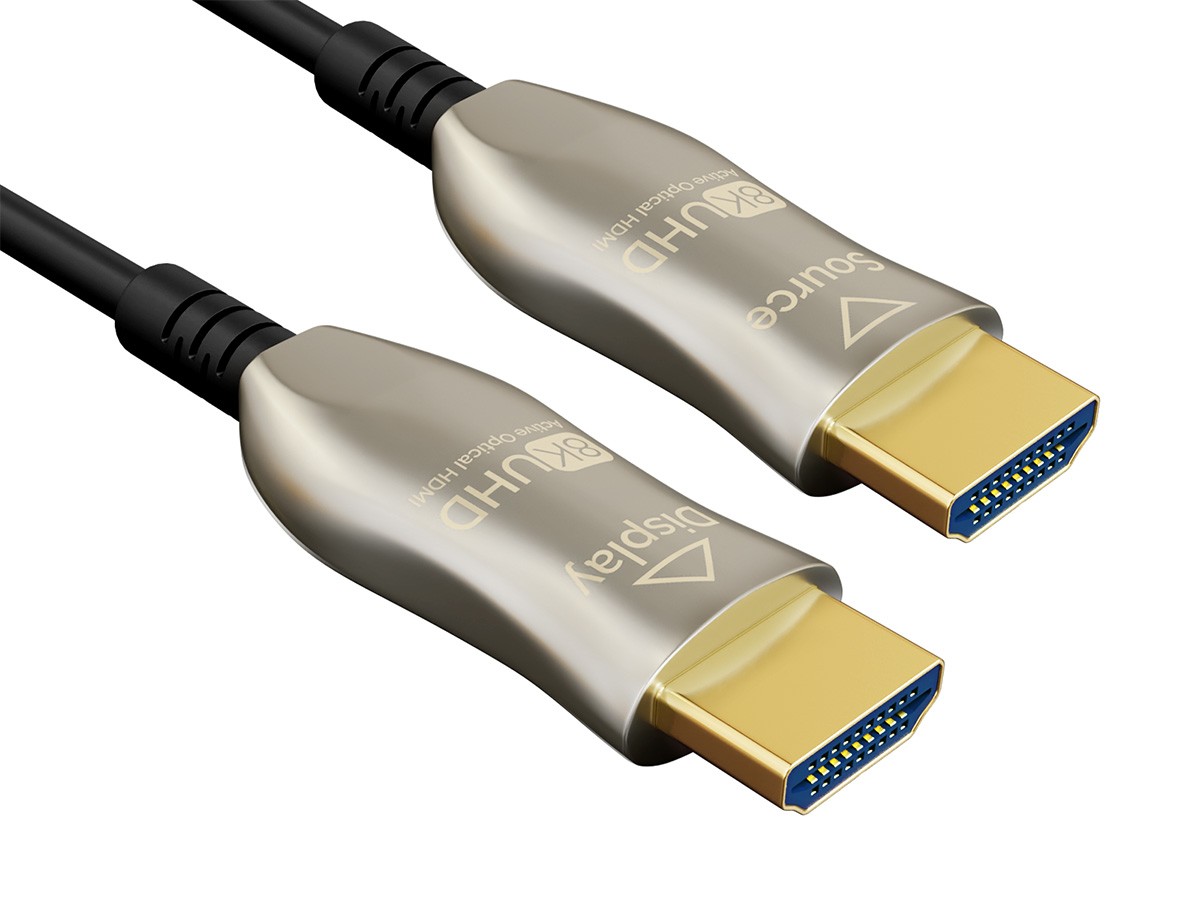
Cable Leader is the direct choice for a video link to a distant display. The description identifies it as an Ultra High Speed HDMI 2.1 active optical cable, with hybrid optical fiber carrying a 48Gbps signal and support for 8K@60Hz or 4K@120Hz. Its source-marked HDMI Type A male connector gives the connection a specific starting point, and the description places it in projector and long-run scenarios. The trade-off is practical: the listed $98.99 price is $70.39 above the speaker wire, and the cable's job is video rather than speaker wiring. Pick Cable Leader when your setup actually needs a 50ft HDMI path; its format is not the natural answer for a speaker-only run.
Final choice by use case
For stereo, car, or home theater speaker wiring, select the Install Link 16 AWG Speaker Wire Cable. It is the more direct match for an audio-only connection and carries the lower listed price. For a projector feed or another distant-display HDMI connection, select the Cable Leader 50ft 8K Fiber Optic HDMI 2.1 Cable. Its fiber-optic HDMI format and stated video capabilities match that job. In short, choose by signal type first, then use the price difference to decide whether the specialized HDMI design is necessary.