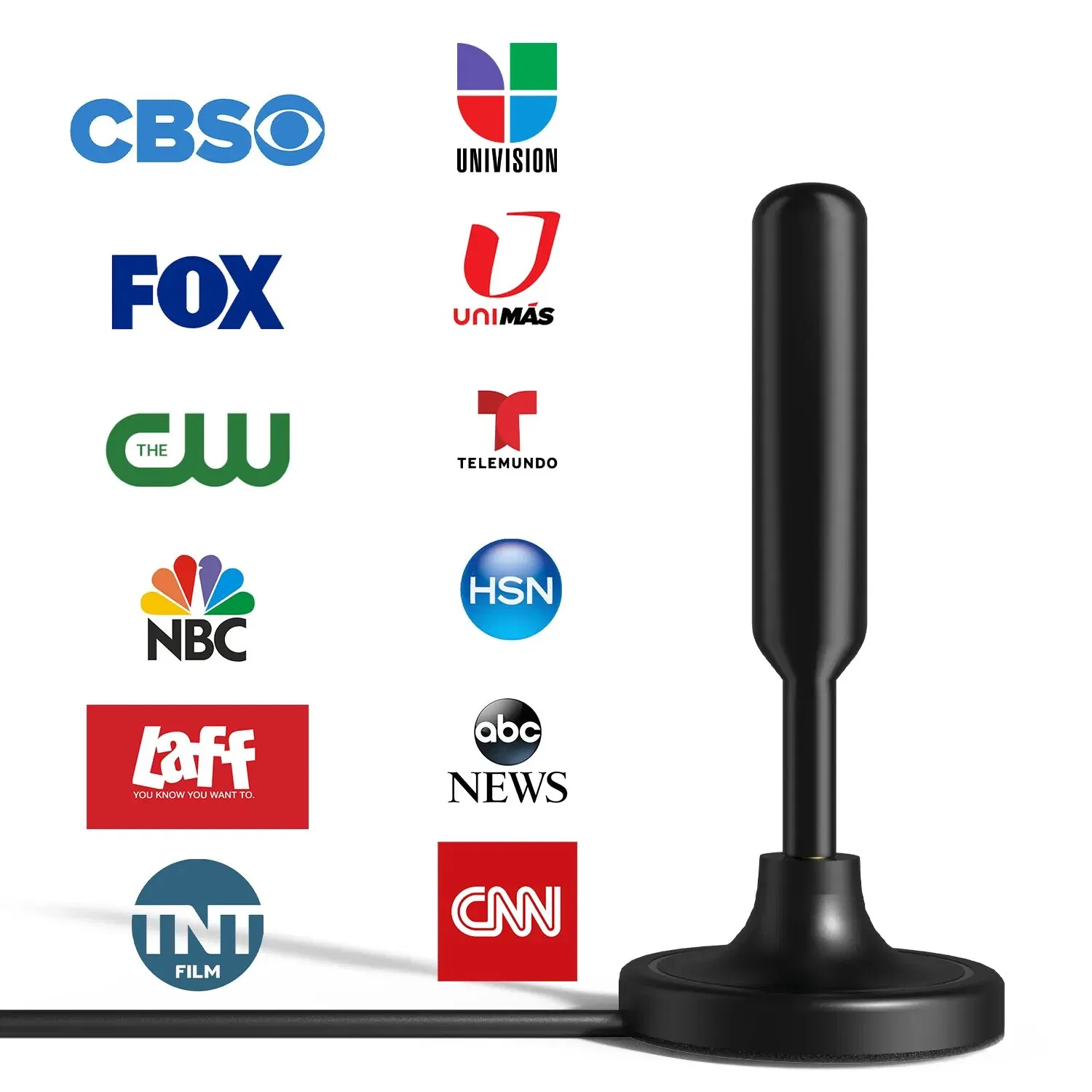

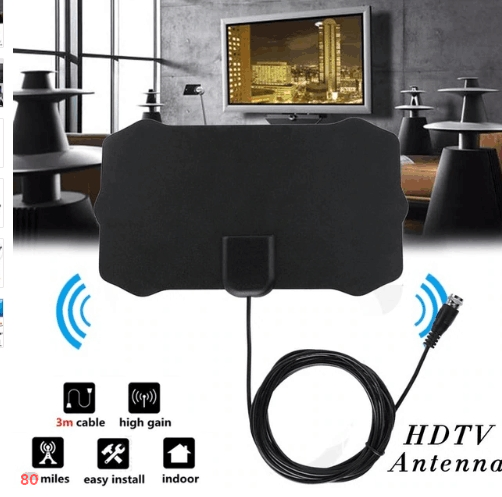
Photos from current listings. Actual item, color, and included accessories may vary.
TV Antenna Buying Guide
A TV antenna is a passive or amplified RF capture device whose real performance is set by element gain, bandwidth, and placement height—not by marketing mileage claims. The core trade-off is indoor convenience versus outdoor raw gain: amplified indoor units fight multipath and cable loss, while large outdoor Yagi or bowtie arrays capture weaker signals with higher directivity. Buy outdoor-rated metal arrays with real dBd/dBi figures for reliable local channels; treat 'miles' ratings and plastic mini antennas as decorative compromises.
Median $24.99
Key takeaways
- Gain is the decisive metric: outdoor Yagi/bowtie arrays deliver roughly 10-15 dBd, while flat indoor panels typically achieve 0-4 dBd before amplification.
- The 5600-mile style rating is marketing fiction; real reception range is bounded by transmitter ERP, terrain, and antenna height (roughly 30-60 miles for suburban outdoor setups).
- UHF (channels 14-36, 470-608 MHz) carries most modern digital locals; VHF-Hi (7-13) still matters in many markets, so dual-band 47-860 MHz coverage avoids missing channels.
At a glance
- Category
- TV, Video & Home Theater
- Last updated
- Nov 27, 2026
Current offers
Highlights
- Gain is the decisive metric: outdoor Yagi/bowtie arrays deliver roughly 10-15 dBd, while flat indoor panels typically achieve 0-4 dBd before amplification.
- The 5600-mile style rating is marketing fiction; real reception range is bounded by transmitter ERP, terrain, and antenna height (roughly 30-60 miles for suburban outdoor setups).
- UHF (channels 14-36, 470-608 MHz) carries most modern digital locals; VHF-Hi (7-13) still matters in many markets, so dual-band 47-860 MHz coverage avoids missing channels.
- Amplifiers only help after a clean passive signal exists; a low-noise mast-mounted preamp beats a built-in USB-powered amp that amplifies noise and overloads near strong transmitters.
Best use cases
- Best fit: suburban or rural home with a roof or attic mount—choose a large outdoor Yagi/bowtie with 10+ dBd gain and RG6 coax for 40-60 mile reception.
- Best fit: apartment or rental within 10-15 miles of towers—pick a flat or dual-band indoor antenna with a switchable amplifier and place it high on a window facing the transmitter.
- Wrong fit: a plastic mini 'DVB-T2' stick antenna for weak-signal areas—it lacks element length for VHF and directivity, so it only works near strong UHF towers.
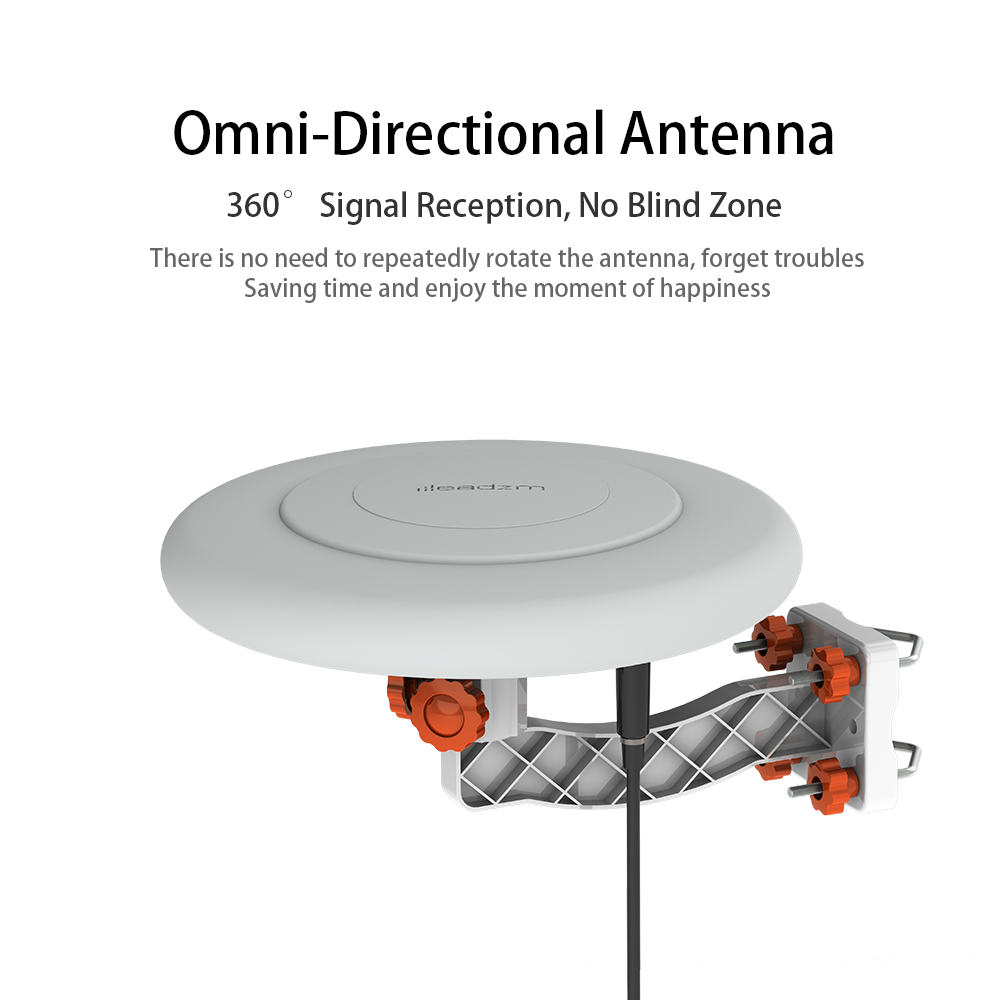
- Wrong fit: a 360-degree rotating outdoor unit when all transmitters share one bearing—a fixed high-gain directional array outperforms an omni/rotator at the same height.
Buying tips
- Match antenna type to band: full-range VHF/UHF elements for markets with VHF stations; compact UHF-only bowtie for UHF-only markets to gain more dB per element.
- Size the array to distance: under 15 miles an indoor amplified panel suffices; 15-40 miles needs a medium outdoor array; beyond 40 miles requires a large deep-fringe Yagi at roof height.
- Use RG6 quad-shield coax for any outdoor run; RG59 loses too much signal above 400 MHz over 25+ feet, erasing the antenna's gain advantage.
- Keep the amplifier at the mast, not at the TV: a mast-mounted preamp overcomes coax loss before it accumulates, while in-line amps at the set amplify noise.
Specs
| Antenna Type | Yagi / Bowtie / Panel / Omni |
|---|---|
| Frequency Band | VHF-Hi + UHF (47-860 MHz) |
| Gain Class | 0-4 dBd indoor / 10-15 dBd outdoor |
| Amplifier | Passive / Mast preamp / Built-in |
Related searches
What to check before buying
- Measure mounting clearance: outdoor arrays need 3-6 ft of boom length and a mast with at least 10 ft above roofline for reliable line-of-sight.
- Check transmitter bearing and distance with a signal map; aim the antenna within ±15 degrees of the tower cluster for maximum gain.
- Confirm the tuner: ATSC 1.0 tuners receive current broadcasts; ATSC 3.0 (NextGen TV) requires a compatible tuner or set-top box for 4K and interactive features.
- Verify outdoor rating: UV-stabilized ABS or aluminum elements and sealed balun survive sun and rain; bare plastic housings crack within seasons.
FAQ
Data sources: eBay / Amazon listings and product attribute feeds. Updated Nov 27, 2026.
Some links on this page are affiliate links. If you buy after clicking one, we may earn a commission at no extra cost to you. This does not change which products appear here or their order. Affiliate disclosure.