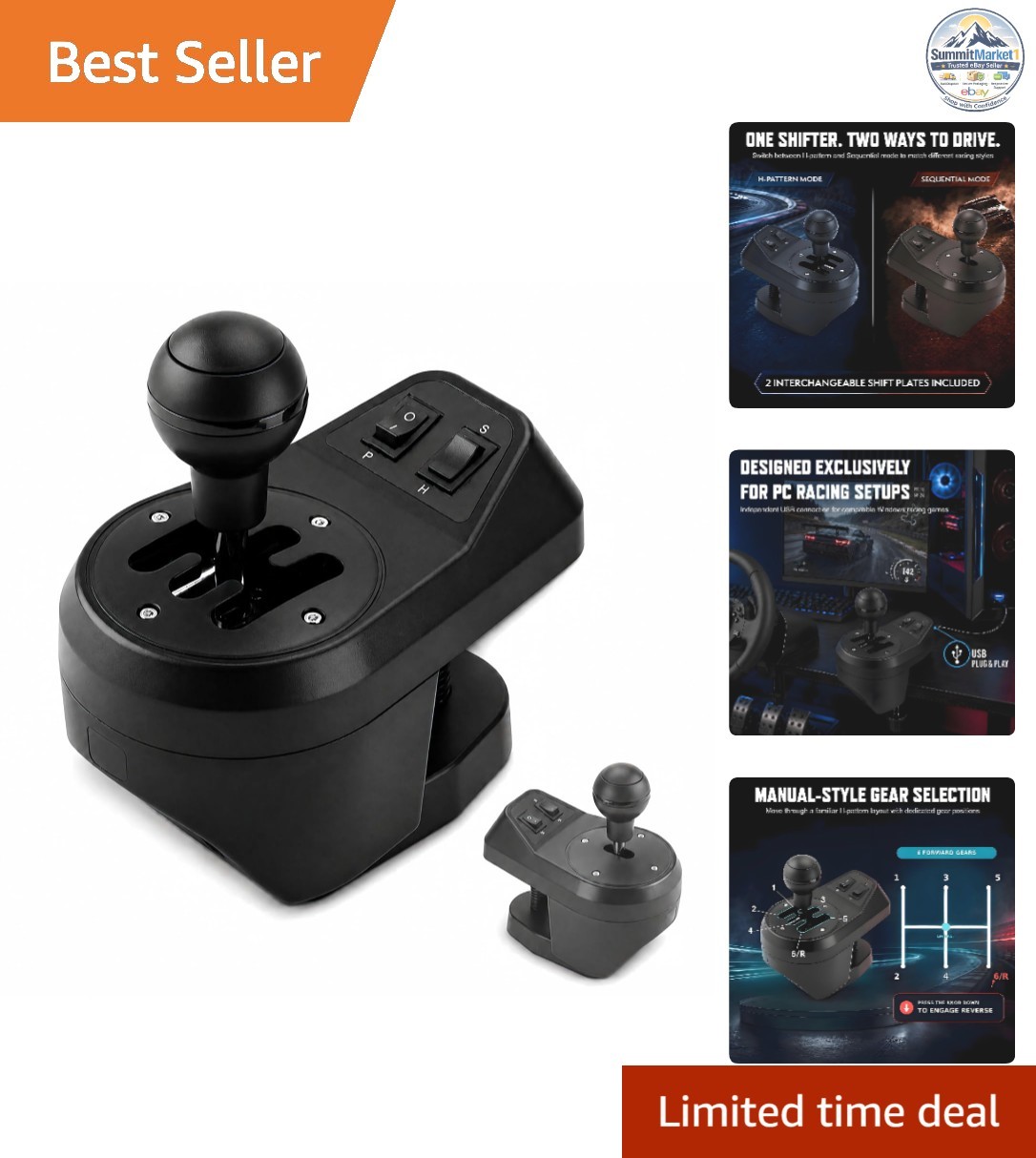

Photos from current listings. Actual item, color, and included accessories may vary.
Sim H Pattern Shifter Buying Guide
An H-pattern shifter is a mechanical gate that lets a sim racer row through discrete gears (typically 5–7 forward plus reverse) using a stick, matched to a PC via USB. The core trade-off is between a flimsy plastic gate with mushy detents and a metal-bodied unit with a positive spring-loaded gate, lockout, and a robust clamp; durable options use metal internals and real mechanical resistance, while compromises rely on rubber bands, potentiometers, or hollow plastic pivots.
Key takeaways
- Gate material decides feel: die-cast aluminum or steel gates with spring-loaded detents give crisp, repeatable shifts; hollow plastic gates develop slop and miss shifts over time.
- Interchangeable H-pattern/sequential models add a switchable gate module — a genuine hardware swap, not software emulation — so verify the sequential gate is a physical part, not just a toggle.
- USB HID plug-and-play on PC requires no proprietary driver; units with clamp mounts need desk thickness under roughly 45–50 mm to seat the screw clamp securely.
At a glance
- Category
- Sim Racing Shifters & Handbrakes
- Last updated
- Nov 28, 2026
Current offers
Highlights
- Gate material decides feel: die-cast aluminum or steel gates with spring-loaded detents give crisp, repeatable shifts; hollow plastic gates develop slop and miss shifts over time.
- Interchangeable H-pattern/sequential models add a switchable gate module — a genuine hardware swap, not software emulation — so verify the sequential gate is a physical part, not just a toggle.
- USB HID plug-and-play on PC requires no proprietary driver; units with clamp mounts need desk thickness under roughly 45–50 mm to seat the screw clamp securely.
- Sensor type matters: Hall-effect or optical sensing is non-contact and drift-free, while potentiometer-based shifters wear and need recalibration.
Best use cases
- Best fit: rally and truck-sim drivers who need a real gate for immersion — pick an all-metal H-pattern with a desk clamp and Hall-effect sensing; skip plastic-bodied toy shifters.
- Best fit: dual-discipline racers — choose an interchangeable H-pattern/sequential unit only if both gate modules are included and mechanically swapped, not emulated in software.
- Wrong fit: buyers wanting a pure sequential or handbrake-only setup should skip H-pattern shifters entirely and buy a dedicated sequential or handbrake unit.
- Wrong fit: buyers with a rig-mounted wheel but no desk surface should confirm the clamp opens wide enough for the rig plate or use a bolt-down base instead of the clamp mount.
Buying tips
- Measure your mounting surface first: most clamp mounts open to about 45–50 mm; thicker desks or rig plates need a bolt-down base or an extension plate.
- Choose metal-on-metal gate internals (aluminum or steel) over plastic gates if you shift hard; plastic detents round off and cause missed 3rd/4th gear rows.
- Prefer Hall-effect or optical sensors over potentiometers — non-contact sensing avoids dead spots and recalibration after heavy use.
- For interchangeable units, confirm both the H-pattern gate and sequential gate are physical parts in the box; a software toggle alone is not a real swap.
Specs
| Gate Type | H-pattern / interchangeable sequential |
|---|---|
| Body Material | Die-cast aluminum vs plastic |
| Shift Sensing | Hall-effect / optical vs potentiometer |
| Mount Type | Desk clamp (~45–50 mm) vs bolt-down |
Related searches
What to check before buying
- Desk or rig thickness: clamp mounts need roughly 45–50 mm max; measure your desk edge or rig plate before buying a clamp-only unit.
- Mounting method: decide clamp vs bolt-down — bolt-down needs pre-drilled holes or slot spacing matching the shifter base.
- PC connection: confirm USB HID plug-and-play compatibility; no driver should be required for basic H-pattern input in sim titles.
- Companion parts: ensure your sim title supports separate shifter input mapping, and budget for a USB hub if your wheelbase already uses all ports.
FAQ
Data sources: eBay / Amazon listings and product attribute feeds. Updated Nov 28, 2026.
Some links on this page are affiliate links. If you buy after clicking one, we may earn a commission at no extra cost to you. This does not change which products appear here or their order. Affiliate disclosure.