
Photos from current listings. Actual item, color, and included accessories may vary.
Racing Sim Sequential Shifter Buying Guide
A racing sim sequential shifter is a dedicated controller that mimics the push-pull or lever-action gear change of a real sequential gearbox, valued for tactile mechanical resistance and repeatable throws over paddle shifters. The core trade-off is between a spring-loaded toggle/lever with microswitch or Hall-effect sensing and a true mechanical detent gate with adjustable tension—the latter delivering the crisp, notchy feel that separates durable sim hardware from toy-grade compromises. Buy a dedicated USB sequential unit if you race rally, touring, or sequential-gearbox cars and want a physical lever; choose a mode-switchable H-pattern/sequential unit only if you need both layouts on one base.
Median $55.84
Key takeaways
- Sensing architecture splits into microswitch-actuated levers, Hall-effect/magnetic sensors, and load-cell-based handles; Hall-effect avoids contact wear and is the durability benchmark for high-use units.
- True sequential feel requires a mechanical detent or spring-return gate with adjustable tension; simple toggle switches with a lever cap feel vague and wear faster under repeated throws.
- USB-native shifters enumerate as a standalone HID game controller, while console-compatible units route through the wheelbase or a console adapter and may not expose full button mapping on PC.
At a glance
- Category
- Sim Racing Shifters & Handbrakes
- Last updated
- Nov 23, 2026
Current offers
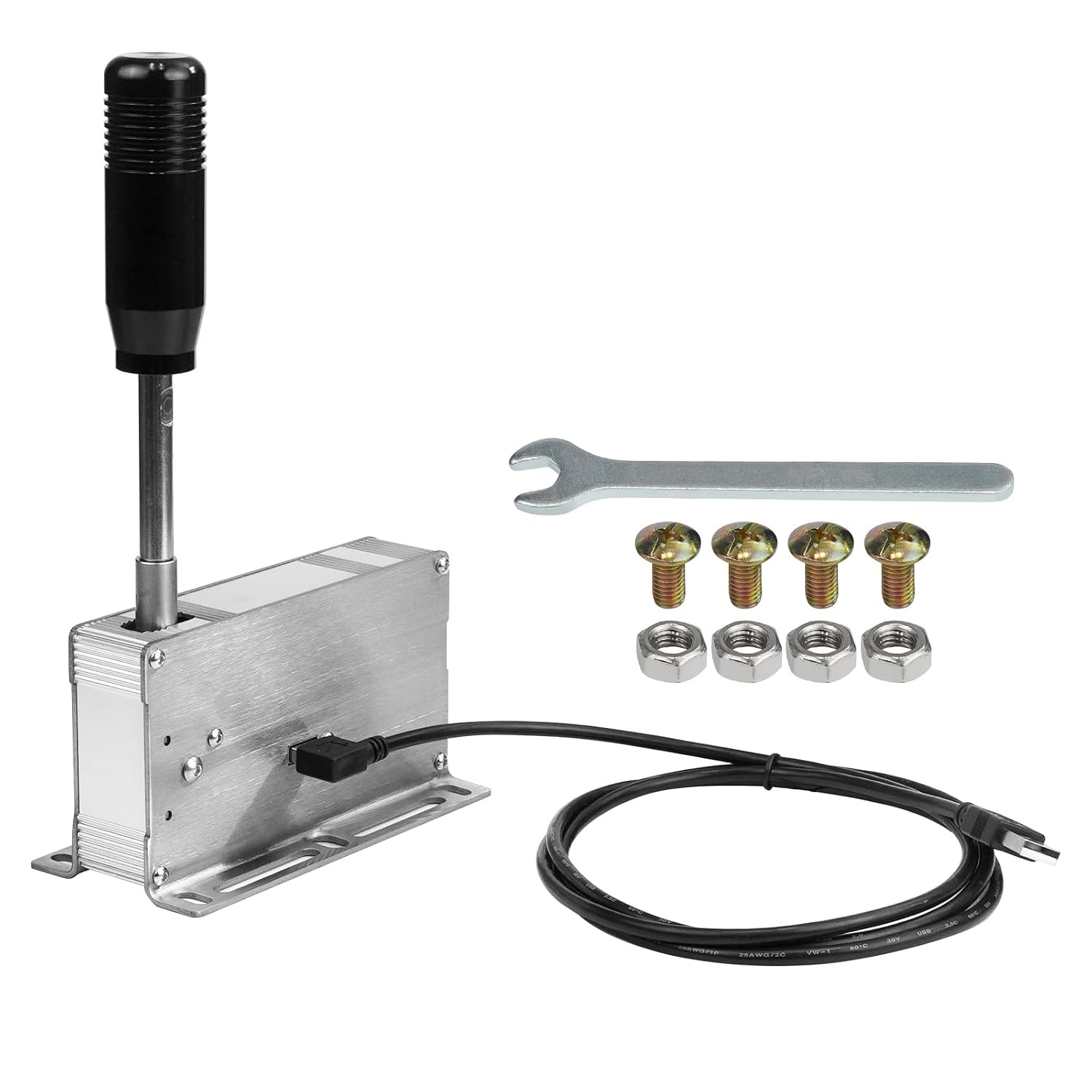 USB Sequential Shifter For Shifter Sim Racing For Logitech G25 G27 G29 G920 T300$52.99View on eBay
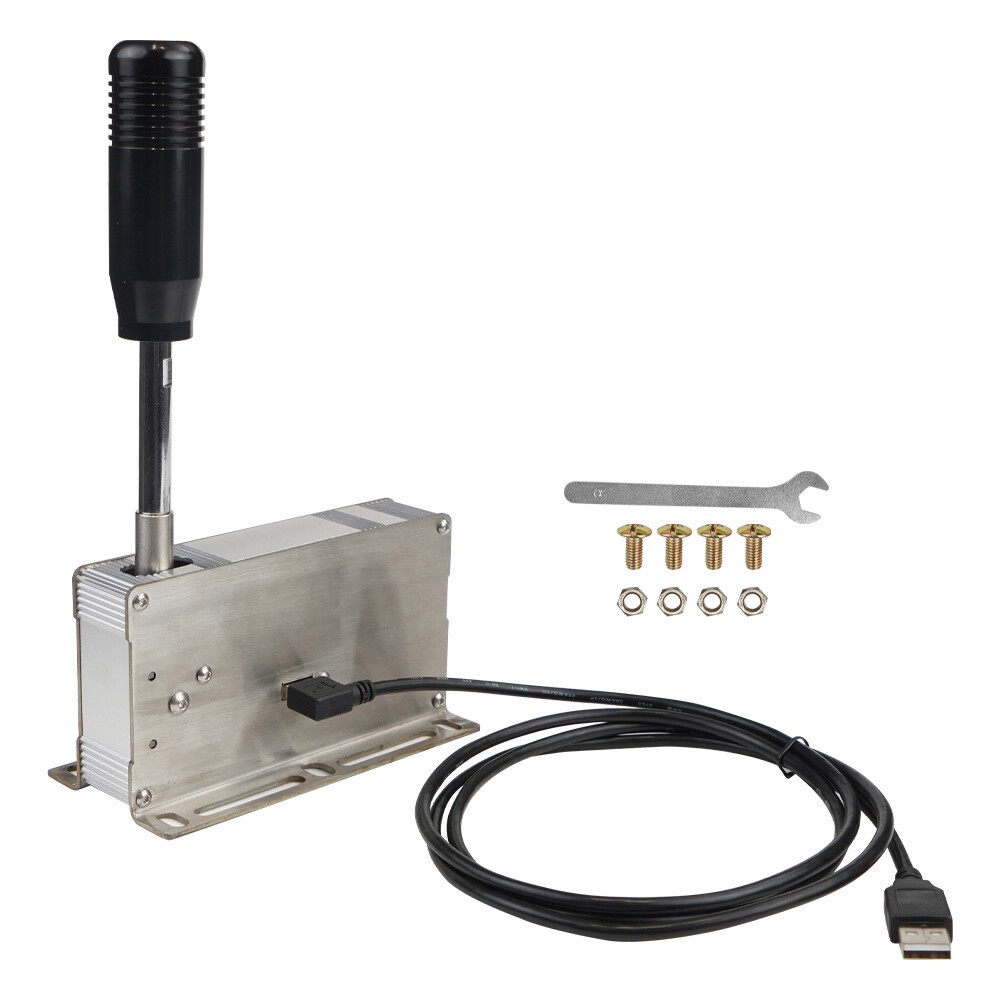 USB Sequential Shifter For Shifter Sim Racing For Logitech G25 G27 G29 G920 T300$54.79View on eBay
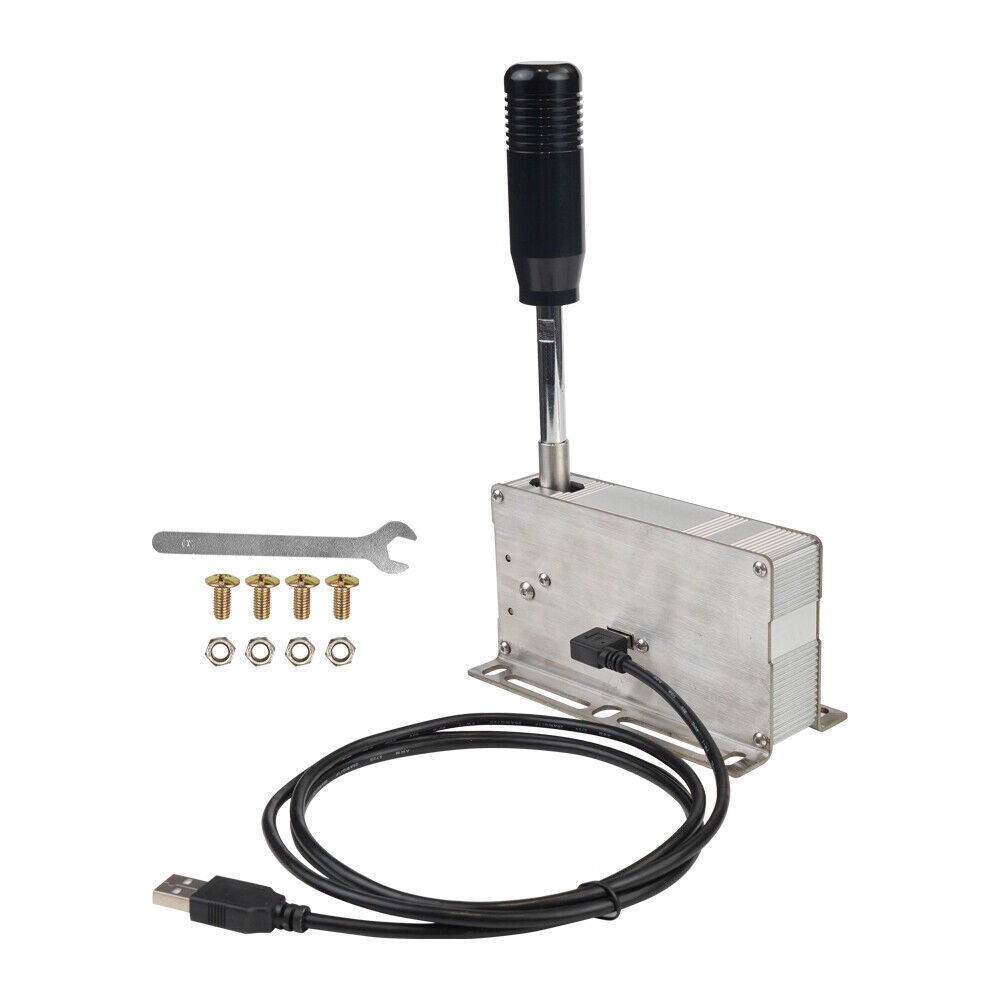 USB Sequential Shifter For Shifter Sim Racing For Logitech G25 G27 G29 G920 T300$56.89View on eBay
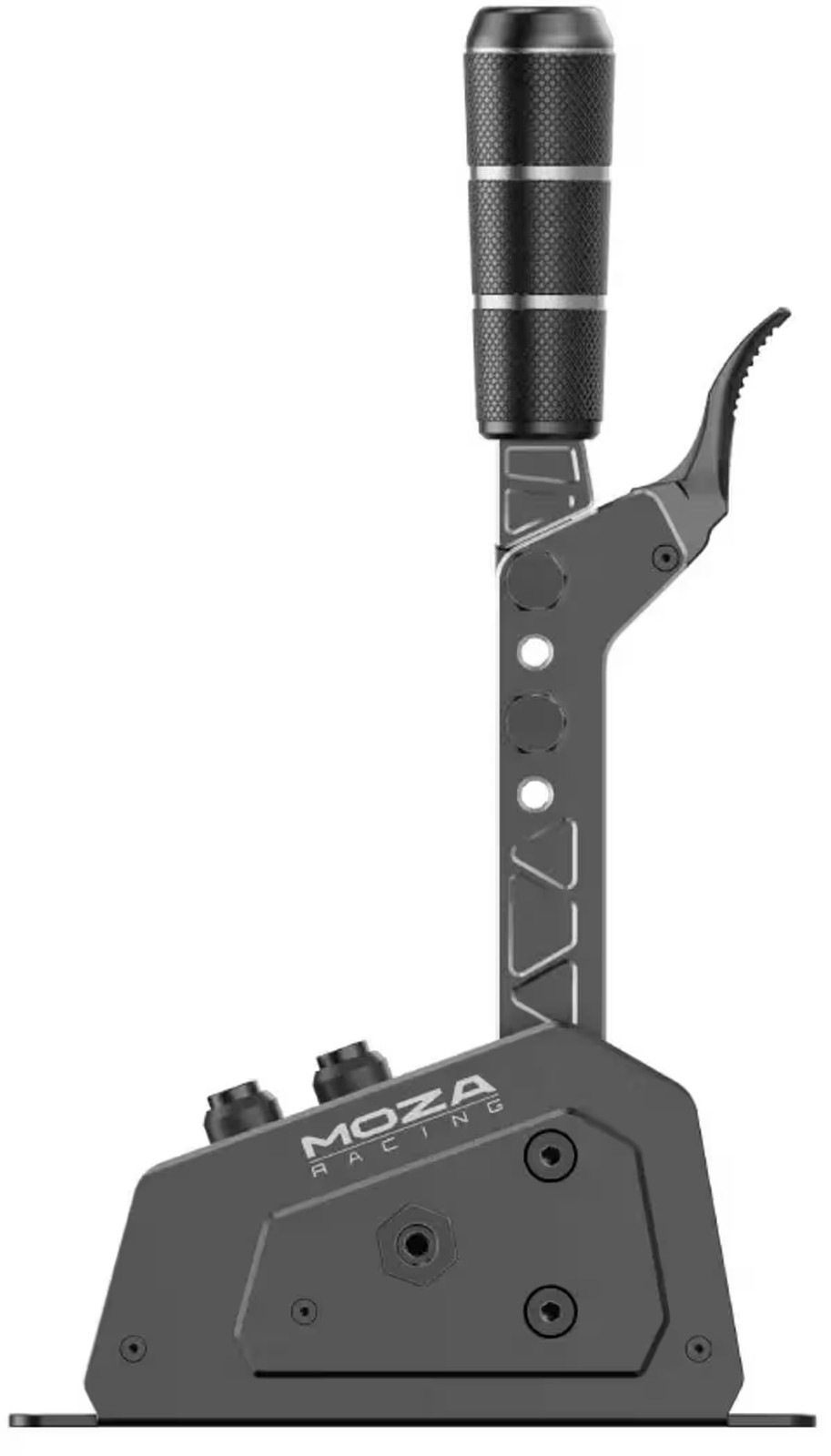 Moza Racing - SGP Sim Racing Stick Sequential Shifter for Windows$129.99View on eBay
Highlights
- Sensing architecture splits into microswitch-actuated levers, Hall-effect/magnetic sensors, and load-cell-based handles; Hall-effect avoids contact wear and is the durability benchmark for high-use units.
- True sequential feel requires a mechanical detent or spring-return gate with adjustable tension; simple toggle switches with a lever cap feel vague and wear faster under repeated throws.
- USB-native shifters enumerate as a standalone HID game controller, while console-compatible units route through the wheelbase or a console adapter and may not expose full button mapping on PC.
- Mode-switchable units use a physical gate plate or lever stop to swap between H-pattern (6-7 slots plus reverse) and sequential (push-pull), so the gate mechanism—not firmware—determines layout accuracy.
Best use cases
- Best fit: rally, touring car, and modern GT racers who want a dedicated push-pull or lever sequential action—pick a USB-native unit with a mechanical detent and adjustable tension.
- Best fit: mixed-discipline sim racers who run both classic H-pattern cars and sequential gearboxes—choose an interchangeable H-pattern/sequential shifter with a positive gate lock, not a software-only mode toggle.
- Wrong fit: buyers wanting a cheap add-on for a Logitech G29/G920 or Thrustmaster T300 who expect the shifter to plug into the wheelbase—most dedicated USB shifters require a separate USB port and do not pass through the wheel's DIN connector.
- Wrong fit: arcade-style players who only need fast up/down shifts—paddle shifters on the wheelbase are faster and cheaper than a standalone sequential lever.
Buying tips
- Match mounting to your rig: measure your shifter plate or extrusion profile first—most units use 2-4 M6 bolts on a 60-80 mm bolt pattern, and clamp-only bases need a flat 20-40 mm desk edge.
- For durability, prioritize Hall-effect or optical sensing over bare microswitches; microswitch units are fine for casual use but contacts wear and mis-shift under heavy repeated throws.
- Check tension adjustability: a real sequential shifter offers a spring preload or detent screw so you can dial resistance from light rally throws to stiff GT changes; fixed-tension toggles cannot be tuned.
- Confirm connection type before buying: USB-native units work on PC without a wheelbase; console use requires a compatible hub or adapter, and wheelbase pass-through only works with that brand's own shifter port.
Specs
| Shift Action | Sequential push-pull / H-pattern gate |
|---|---|
| Sensor Type | Hall-effect / microswitch / load cell |
| Connection | USB HID native / wheelbase pass-through |
| Tension Adjust | Spring preload / fixed detent |
Related searches
What to check before buying
- Measure your rig's shifter mounting plate or extrusion slot spacing and confirm the shifter's bolt pattern (commonly 2-4x M6 on 60-80 mm centers) before ordering.
- Verify you have a free USB-A port on your PC or powered hub—most dedicated sequential shifters are USB-native and do not connect through the wheelbase.
- Check desk or rig clearance for the lever throw: a sequential lever needs roughly 80-120 mm of travel clearance above the base and a stable, non-flexing mount.
- Confirm console compatibility separately: PC is plug-and-play for USB HID, but PlayStation/Xbox use requires a compatible wheelbase hub or third-party adapter.
FAQ
Data sources: eBay / Amazon listings and product attribute feeds. Updated Nov 23, 2026.
Some links on this page are affiliate links. If you buy after clicking one, we may earn a commission at no extra cost to you. This does not change which products appear here or their order. Affiliate disclosure.