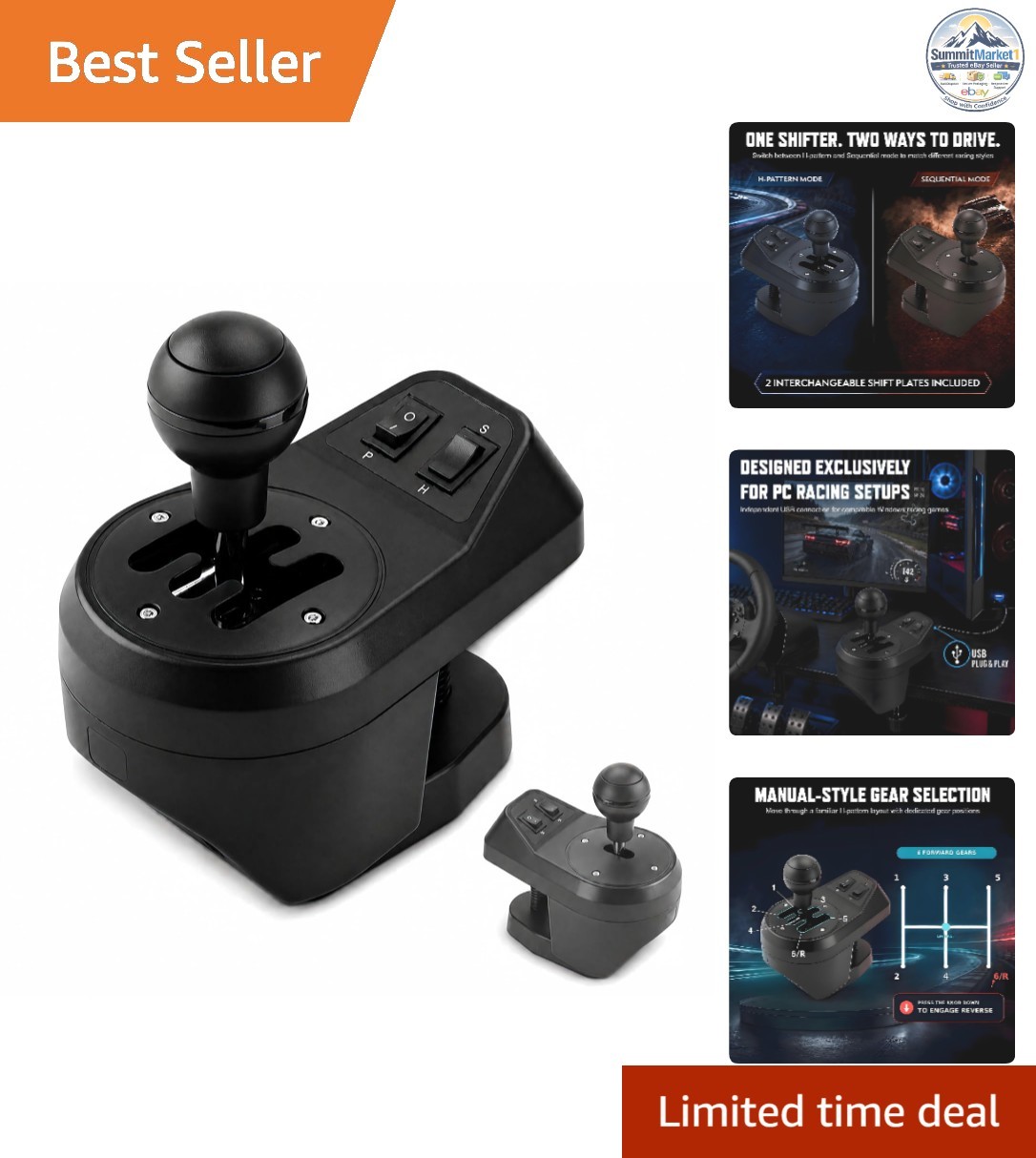

Photos from current listings. Actual item, color, and included accessories may vary.
H Pattern Shifter Sim Racing Buying Guide
An H-pattern sim racing shifter is a mechanical gear selector that replicates the gated 6-speed or 7-speed layout of a real manual transmission, typically with a spring-loaded stick, tactile gates, and USB output for PC. The primary trade-off is between low-cost potentiometer-based switches with plastic gates versus Hall-effect or optical sensors with metal internal detents, which determines shift feel, longevity, and whether the unit survives aggressive shifting. The decision rule: choose a sensor-based, metal-gated unit with a clamp or bolt-down mount if you shift hard and want consistency; accept a plastic-gated potentiometer unit only for casual, low-force use.
Key takeaways
- Sensor type is the durability dividing line: Hall-effect or optical sensors are contactless and rated for millions of shifts, while potentiometers wear and develop dead spots under repeated motion.
- Gate material dictates feel and wear: machined aluminum or steel gates give crisp, repeatable detents; ABS plastic gates round off and develop slop over months of use.
- Mounting rigidity matters more than shifter internals: a clamp mount on a thin desk flexes and misses gates, while a bolted or heavy-duty clamp on a rigid rig preserves shift accuracy.
At a glance
- Category
- Sim Racing Shifters & Handbrakes
- Last updated
- Nov 28, 2026
Current offers
Highlights
- Sensor type is the durability dividing line: Hall-effect or optical sensors are contactless and rated for millions of shifts, while potentiometers wear and develop dead spots under repeated motion.
- Gate material dictates feel and wear: machined aluminum or steel gates give crisp, repeatable detents; ABS plastic gates round off and develop slop over months of use.
- Mounting rigidity matters more than shifter internals: a clamp mount on a thin desk flexes and misses gates, while a bolted or heavy-duty clamp on a rigid rig preserves shift accuracy.
- H-pattern vs sequential mode switching is electronic on dual-mode units, but the physical gate plate must be swapped or rotated on many models—confirm the mechanism before buying for mixed use.
Best use cases
- Best fit: rally, drift, and truck sim drivers who need fast H-pattern throws and a firm clamp—pick a metal-gated, Hall-effect unit with a wide desk clamp and bolt-down holes.
- Best fit: casual PC drivers on a standard desk who shift gently and want a compact, affordable H-pattern—a plastic-gated potentiometer unit with a C-clamp is adequate.
- Wrong fit: buyers wanting a sequential-only shifter for formula or GT cars—skip dual-mode H-pattern units and buy a dedicated sequential or paddle set instead.
- Wrong fit: console-only racers—most USB H-pattern shifters are PC-only; verify native console compatibility or plan for a drive-hub adapter before buying.
Buying tips
- Prioritize sensor type over cosmetics: Hall-effect or optical sensors outlast potentiometers and eliminate dead zones; potentiometer units are acceptable only for light use.
- Check gate material and detent design: aluminum or steel gates with ball-detent springs give consistent, audible engagement; plastic gates and foam detents feel mushy and wear quickly.
- Match mounting to your rig: a clamp needs a desk edge under 2 inches thick and a flat underside; a bolted base needs M6 or M8 holes in a metal profile rig—measure before choosing.
- Confirm cable and protocol: USB-A plug-and-play with no driver is standard on PC; units with separate handbrake or sequential outputs may need a USB hub or splitter.
Specs
| Sensor Type | Hall-effect / optical vs potentiometer |
|---|---|
| Gate Material | Aluminum / steel vs ABS plastic |
| Shift Modes | H-pattern 6/7-speed; dual-mode sequential |
| Mounting | C-clamp (0.4–2 in) or bolted base |
Related searches
What to check before buying
- Measure your desk or rig edge thickness and underside clearance—clamp jaws typically span 0.4 to 2 inches, and deep lips or rounded edges prevent a secure grip.
- Verify you have a flat, rigid mounting surface: a flexing desk or thin wood top will absorb shift force and cause missed gates; add a reinforcement plate if needed.
- Confirm PC USB-A port availability and cable reach from the shifter location to the PC or powered hub—most units ship with a fixed-length cable under 6 feet.
- Check shift knob compatibility: most units use M10 or M12 threaded shafts or a slip-on boot; aftermarket knobs need matching thread pitch or an adapter.
FAQ
Data sources: eBay / Amazon listings and product attribute feeds. Updated Nov 28, 2026.
Some links on this page are affiliate links. If you buy after clicking one, we may earn a commission at no extra cost to you. This does not change which products appear here or their order. Affiliate disclosure.