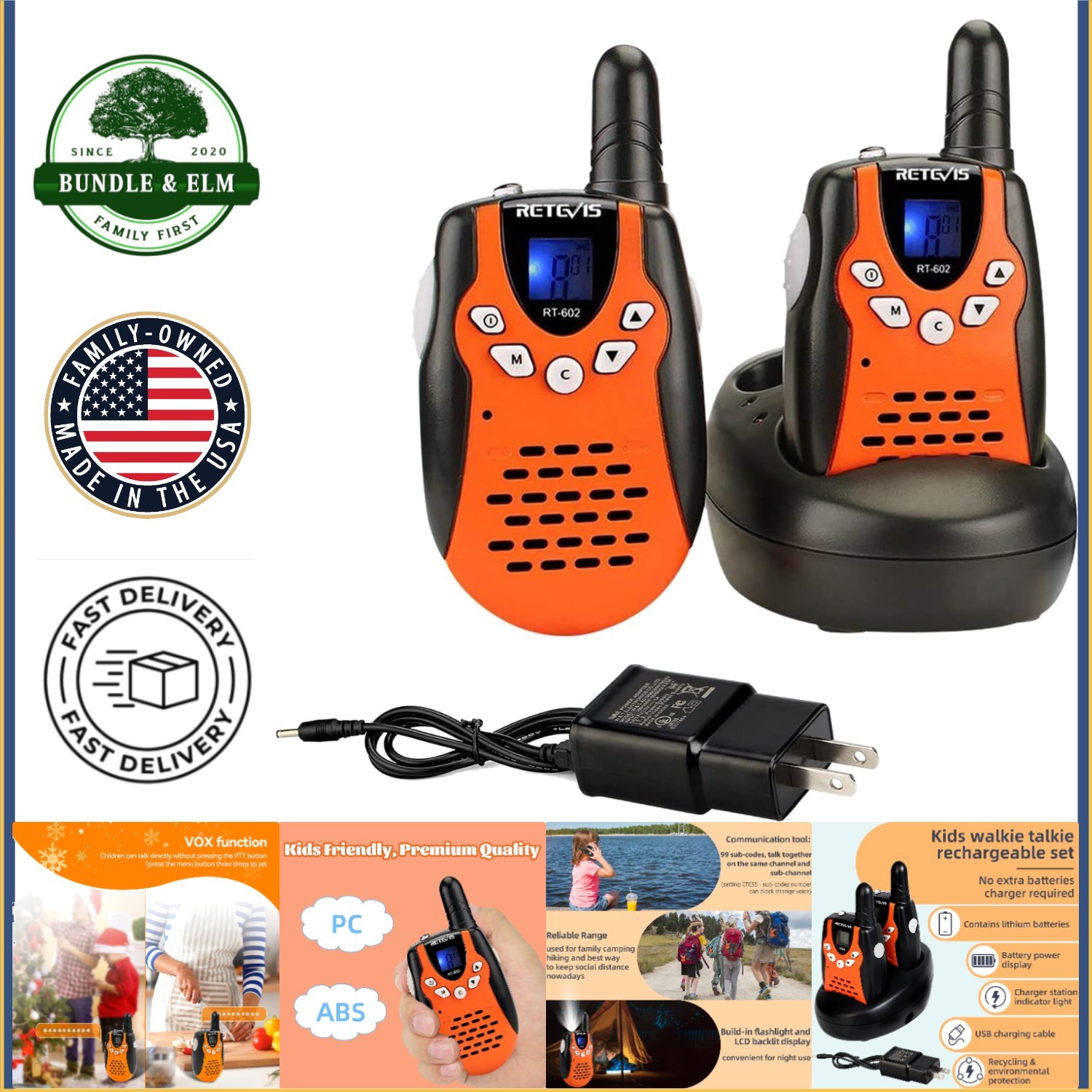

Photos from current listings. Actual item, color, and included accessories may vary.
Rechargeable Walkie Talky Buying Guide
Rechargeable walkie-talkies replace disposable AA cells with integrated or swappable lithium-ion or NiMH packs, trading upfront cost for lower running expenses and consistent power output. The core trade-off is battery architecture: sealed USB-C lithium packs are lighter and simpler, while removable packs let you swap in fresh cells during long shifts. Choose based on duty cycle and charging infrastructure, not claimed wattage alone.
Key takeaways
- Lithium-ion packs deliver 3.7V nominal and hold charge for months; NiMH packs are 1.2V per cell and self-discharge faster but tolerate abuse better.
- IP54 or higher ingress protection is essential for outdoor use; IPX4 handles rain splashes but not dust or submersion.
- FRS/GMRS handhelds are legally capped at 2W (FRS) or 5W (GMRS) in the US; higher claimed wattage usually means non-compliant or unlicensed bands.
At a glance
- Category
- Walkie-Talkies & Two-Way Radios
- Last updated
- Nov 29, 2026
Current offers
Highlights
- Lithium-ion packs deliver 3.7V nominal and hold charge for months; NiMH packs are 1.2V per cell and self-discharge faster but tolerate abuse better.
- IP54 or higher ingress protection is essential for outdoor use; IPX4 handles rain splashes but not dust or submersion.
- FRS/GMRS handhelds are legally capped at 2W (FRS) or 5W (GMRS) in the US; higher claimed wattage usually means non-compliant or unlicensed bands.
- USB-C charging at 5V/1A is now standard on consumer models; fast-charge docks often use 12V contacts and require the matched cradle.
Best use cases
- Best fit: family camping and hiking — pick a sealed USB-C lithium pair rated IPX4 or better with at least 12 hours of stated talk time; skip removable-pack models that add bulk and lose waterproofing.
- Best fit: retail, warehouse, or event staff — choose swappable lithium packs plus a multi-bay charging dock so radios never go offline mid-shift; skip sealed consumer units with no spare-pack option.
- Wrong fit: licensed business bands or long-range backcountry — consumer FRS/GMRS rechargeables top out around 2 miles in terrain; step up to a licensed UHF/VHF commercial radio instead.
Buying tips
- Match battery chemistry to climate: lithium-ion performs down to -20°C, while NiMH loses roughly 20% capacity near 0°C — pick lithium for winter use.
- Check pack voltage and contact layout before buying spares; a 3.7V lithium pack will not interchange with a 4.8V NiMH cradle even if the radio shell looks identical.
- For all-day use, calculate talk-time margin: a 1500mAh pack yields roughly 8-10 hours at 5% transmit duty; choose 2000mAh+ or a spare for 12-hour shifts.
- Prefer USB-C PD-compatible charging over proprietary barrel plugs so one cable services radios, phones, and power banks on the road.
Specs
| Battery Chemistry | Lithium-ion vs NiMH |
|---|---|
| Charging Interface | USB-C vs proprietary dock |
| Ingress Protection | IPX4 / IP54 / IP67 |
| Battery Capacity | 1000-3000mAh typical |
Related searches
What to check before buying
- Measure your vehicle cup holder or belt clip clearance: most handhelds run 55-65mm wide and 130-170mm tall without the antenna.
- Confirm your wall power is 100-240V if buying imported models; US-market chargers are 120V and may lack switching.
- Check that the radio's frequency band (FRS/GMRS 462-467MHz in the US, PMR446 446MHz in Europe) is legal in your country before purchase.
- Verify the package includes the charging cradle or USB-C cable — many rechargeable models ship radio-only and require a separate dock.
FAQ
Data sources: eBay / Amazon listings and product attribute feeds. Updated Nov 29, 2026.
Some links on this page are affiliate links. If you buy after clicking one, we may earn a commission at no extra cost to you. This does not change which products appear here or their order. Affiliate disclosure.