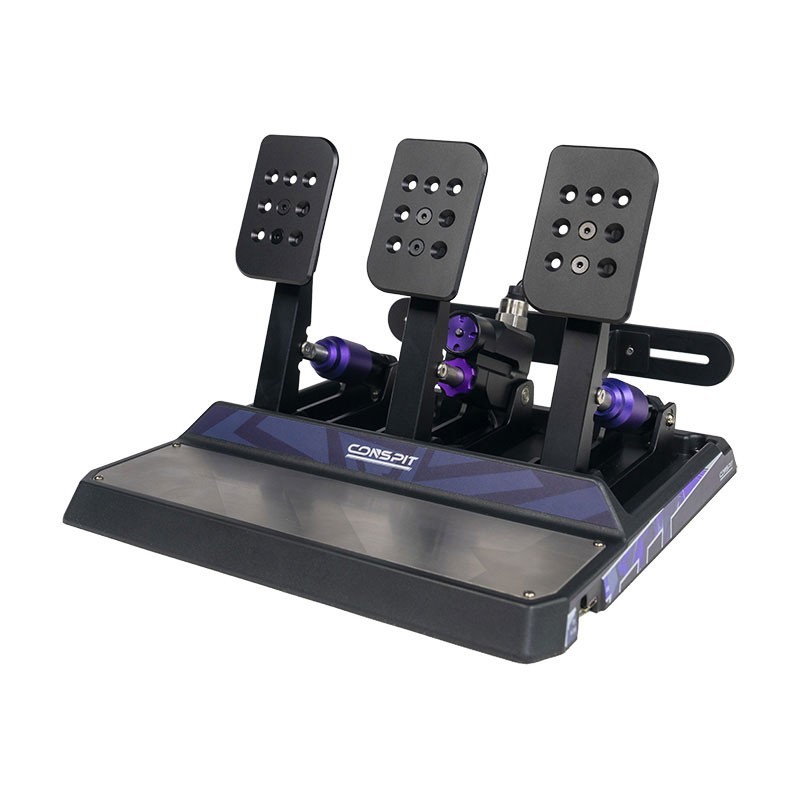

Photos from current listings. Actual item, color, and included accessories may vary.
CONSPIT CPP APEX Buying Guide
The CONSPIT CPP APEX is a three-pedal hydraulic sim racing set that brings load-cell braking and hydraulic resistance to a mid-tier price point. The core trade-off is hydraulic realism versus maintenance and mounting complexity: hydraulic systems offer progressive, fluid-damped feel but demand leak checks and rigid rigs, while spring-loaded sets are simpler but less consistent. Choose the CPP APEX if you have a solid 8020 or steel rig and want clutch-inclusive hydraulic feel; skip it if you race on a folding stand or desk clamp.
Key takeaways
- Hydraulic brake and throttle circuits use fluid damping for progressive resistance, unlike spring-only budget pedals.
- Three-pedal layout includes a clutch, enabling manual-gearbox and rally driving without a separate add-on.
- Load-cell brake sensor measures pedal force directly, giving consistent braking thresholds across sessions.
At a glance
- Category
- Sim Racing Pedals
- Status
- Listings available
- Last updated
- Nov 23, 2026
Current offers
Highlights
- Hydraulic brake and throttle circuits use fluid damping for progressive resistance, unlike spring-only budget pedals.
- Three-pedal layout includes a clutch, enabling manual-gearbox and rally driving without a separate add-on.
- Load-cell brake sensor measures pedal force directly, giving consistent braking thresholds across sessions.
- Modular pedal plates and adjustable travel let you tune spacing and throw to your rig and driving style.
Best use cases
- Best fit: sim racers with an 8020 aluminum rig or welded steel cockpit who want hydraulic brake feel and a clutch for manual shifting.
- Best fit: rally and drift drivers needing three pedals with progressive throttle and clutch control on a permanent rig.
- Wrong fit: desk-clamp or folding-wheel-stand users—hydraulic pedals require a rigid, bolted mounting surface to avoid flex and inconsistent braking.
- Skip if you only race Formula-style paddle-shift cars: a two-pedal load-cell set saves space and setup time with no clutch penalty.
Buying tips
- Confirm your rig has a pre-drilled pedal deck or 8020 profile slots; hydraulic sets bolt down and cannot safely clamp to thin desk edges.
- Check that your wheelbase and pedals share a USB connection path or that the pedal set has its own USB interface for direct PC connection.
- Measure pedal-deck width: a three-pedal set needs roughly 300–400 mm of mounting width plus clearance for heel rests and cable routing.
- Verify brake-fluid type and bleed procedure in the manual; hydraulic pedals need periodic bleeding and should not be mounted reservoir-down.
Specs
| Pedal Type | Hydraulic 3-pedal set (clutch/brake/throttle) |
|---|---|
| Brake Sensing | Load-cell force measurement |
| Mounting | Bolted pedal deck / 8020 profile |
| Connection | USB to PC, separate axis calibration |
Related searches
What to check before buying
- Rig rigidity: pedal deck must be bolted to metal or thick MDF—flex ruins hydraulic brake consistency.
- Mounting pattern: measure hole spacing and confirm your deck matches or can be drilled.
- Floor and climate: keep the pedal set away from carpet fibers and extreme cold, which thicken hydraulic fluid and alter feel.
- Companion parts: ensure a USB port is free and that your wheelbase software supports a separate pedal axis calibration.
FAQ
Data sources: eBay / Amazon listings and product attribute feeds. Updated Nov 23, 2026.
Some links on this page are affiliate links. If you buy after clicking one, we may earn a commission at no extra cost to you. This does not change which products appear here or their order. Affiliate disclosure.