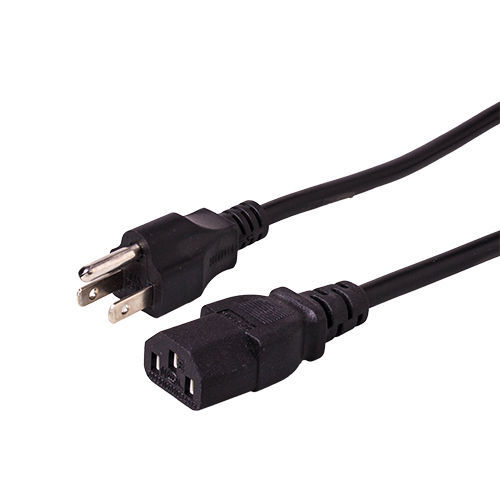

Photos from current listings. Actual item, color, and included accessories may vary.
2 Prong Power Cord Buying Guide
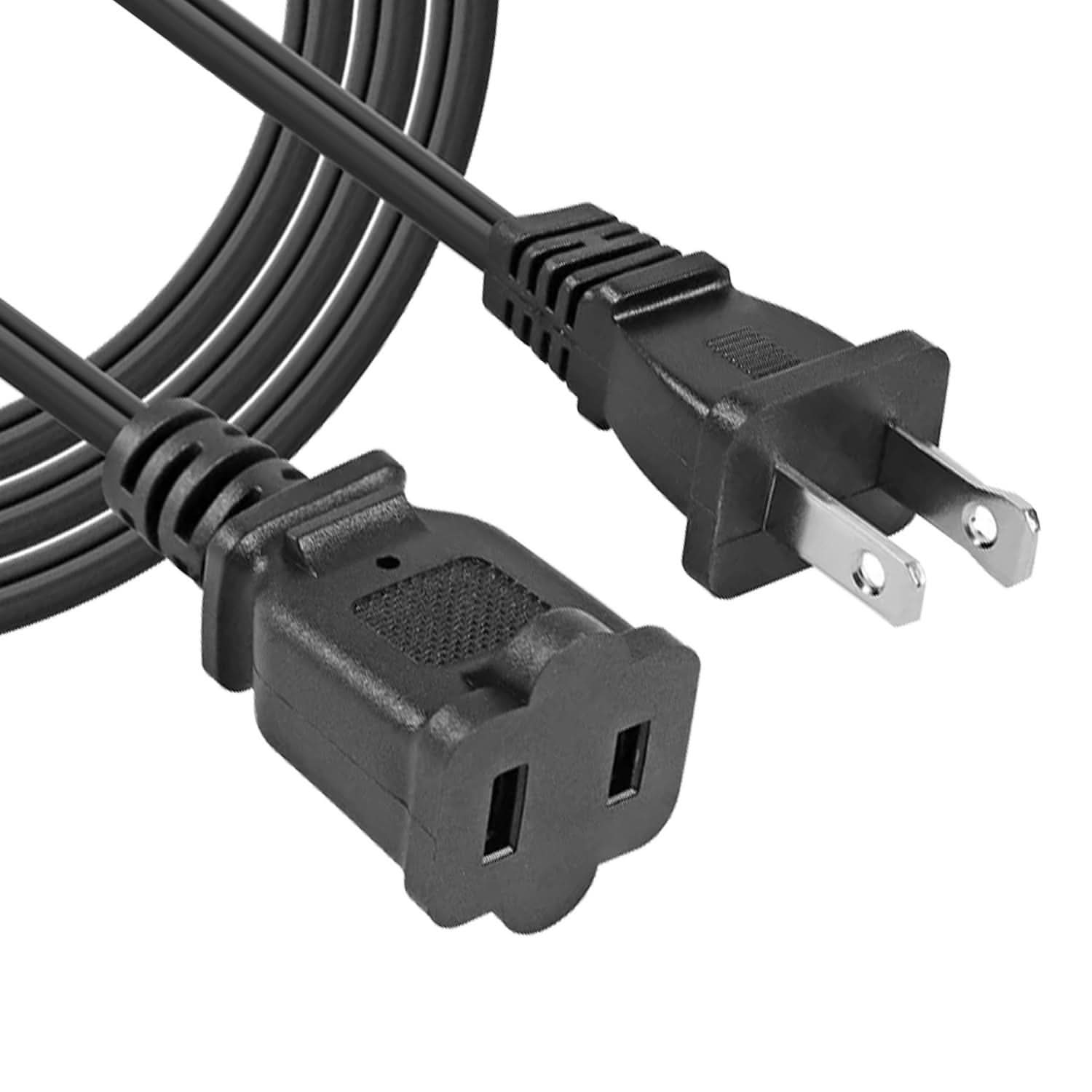
A 2 prong power cord is a non-grounded AC cable with a 2-slot (ungrounded) connector, typically used for double-insulated appliances like lamps, chargers, and small electronics. The critical trade-off is conductor gauge and jacket quality: 18 AWG is fine for low-draw devices, but 16 AWG or heavier is needed for higher-wattage loads. The decision rule: match the cord's wire gauge to the appliance's current draw, and never substitute a 2-prong cord for a 3-prong grounded appliance.
Median $14.09
Key takeaways
- 2-prong cords use polarized (one blade wider) or non-polarized plugs; polarized plugs ensure correct neutral connection for safety.
- Conductor size matters: 18 AWG handles up to 10A/1250W, 16 AWG up to 13A/1625W, and 14 AWG up to 15A/1875W for short runs.
- Jacket material: PVC is standard and flexible; TPE or rubber offers better cold-weather flexibility and abrasion resistance.
At a glance
- Category
- PC Power Supplies & Cables
- Last updated
- Nov 28, 2026
Current offers
Highlights
- 2-prong cords use polarized (one blade wider) or non-polarized plugs; polarized plugs ensure correct neutral connection for safety.
- Conductor size matters: 18 AWG handles up to 10A/1250W, 16 AWG up to 13A/1625W, and 14 AWG up to 15A/1875W for short runs.
- Jacket material: PVC is standard and flexible; TPE or rubber offers better cold-weather flexibility and abrasion resistance.
- Length affects voltage drop: 3-6 ft is ideal for low-power devices; runs over 10 ft should use heavier gauge to avoid heat buildup.
Best use cases
- Best fit: Replace a damaged cord on a double-insulated lamp, phone charger, or small appliance rated under 10A; choose 18 AWG for lengths up to 6 ft.
- Best fit: Power a higher-draw device like a space heater or power tool (up to 13A) with a 16 AWG cord kept under 10 ft.
- Wrong fit: Never use a 2-prong cord on any appliance with a metal chassis or 3-prong inlet; grounding is required for safety.
- Skip: Avoid 2-prong cords for outdoor or wet locations unless explicitly rated for outdoor use with a weather-resistant jacket.
Buying tips
- Match the cord's wire gauge to the appliance's amp rating: 18 AWG for ≤10A, 16 AWG for ≤13A, 14 AWG for ≤15A.
- Choose polarized plugs for devices with one wider blade; non-polarized for reversible plugs—never force a polarized plug into a non-polarized outlet.
- For runs longer than 10 ft, increase wire gauge by one size (e.g., 18 AWG to 16 AWG) to compensate for voltage drop.
- Look for a molded strain relief at both ends; it prevents conductor breakage at the plug and connector.
Specs
| Wire Gauge | 18/16/14 AWG |
|---|---|
| Plug Type | Polarized or Non-Polarized |
| Connector Type | IEC C7/C8 or NEMA 1-15 |
| Jacket Material | PVC / TPE / Rubber |
Related searches
What to check before buying
- Measure the distance from outlet to device; add 1-2 ft of slack, and select a cord length that avoids tight bends.
- Confirm the device's inlet is a 2-slot (ungrounded) connector—typically IEC C7 or C8—not a 3-prong C13/C14.
- Check the appliance's power rating (watts or amps) and ensure the cord's gauge and plug rating exceed it.
- Verify the plug type matches your country's outlet standard (e.g., NEMA 1-15 for North America, Europlug for Europe).
FAQ
Data sources: eBay / Amazon listings and product attribute feeds. Updated Nov 28, 2026.
Some links on this page are affiliate links. If you buy after clicking one, we may earn a commission at no extra cost to you. This does not change which products appear here or their order. Affiliate disclosure.