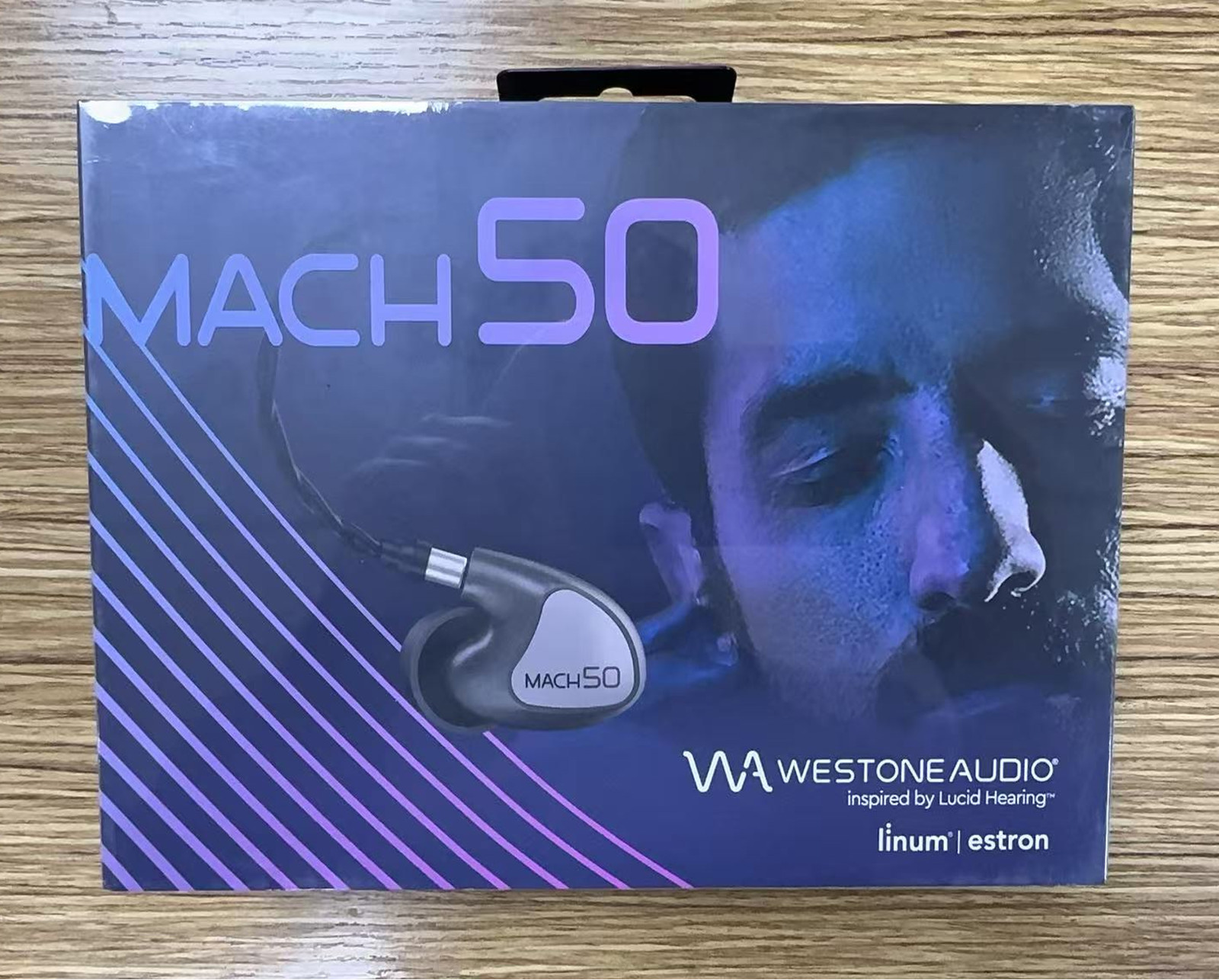

Photos from current listings. Actual item, color, and included accessories may vary.
Westone Audio MACH 50 Buying Guide
The Westone Audio MACH 50 is a universal-fit in-ear monitor built around a five-driver, three-way passive crossover architecture, aimed at buyers who want reference-grade separation without going custom-molded. The core trade-off in this tier is driver count and crossover complexity versus fit tolerance and source quality: more drivers demand a clean, low-impedance-matched source and a secure seal, while simpler single- or dual-driver designs are more forgiving of poor tips and weak amps. The decision rule: buy the MACH 50 only if you will commit to proper tip rolling and a dedicated DAC/amp or low-output-impedance player; otherwise step down to a two- or three-driver IEM and spend the savings on fit and source.
Key takeaways
- Five balanced-armature drivers per side split across a three-way passive crossover, giving dedicated low, mid, and high frequency groups rather than a single full-range driver.
- Balanced-armature design delivers high sensitivity and low distortion at low volume, but bass extension depends on a proper pneumatic seal far more than on driver count.
- Universal MACH chassis uses a shallow-insertion nozzle and memory-wire cable over-ear routing, so fit is governed by tip selection (foam vs silicone) and cable angle.
At a glance
- Category
- In-Ear Earphones
- Status
- Listings available
- Last updated
- Nov 27, 2026
Current offers
Highlights
- Five balanced-armature drivers per side split across a three-way passive crossover, giving dedicated low, mid, and high frequency groups rather than a single full-range driver.
- Balanced-armature design delivers high sensitivity and low distortion at low volume, but bass extension depends on a proper pneumatic seal far more than on driver count.
- Universal MACH chassis uses a shallow-insertion nozzle and memory-wire cable over-ear routing, so fit is governed by tip selection (foam vs silicone) and cable angle.
- 3.5mm single-ended termination and low-impedance balanced-armature load make output impedance matching on the source critical; high-impedance headphone jacks can shift the crossover voicing.
Best use cases
- Best fit: critical listening and studio reference work from a dedicated DAC/amp or low-output-impedance DAP, where the three-way crossover's separation and imaging justify the five-driver cost.
- Best fit: stage and monitoring use where over-ear memory-wire routing and a secure foam-tip seal are needed for isolation and cable noise control.
- Wrong fit: casual phone listening or noisy commutes on a stock 3.5mm dongle, where source output impedance and ambient noise erase the crossover advantage — pick a two-driver sealed IEM instead.
- Wrong fit: buyers unwilling to tip-roll or replace tips; a shallow-nozzle universal multi-driver will underperform a well-sealed single-driver at a fraction of the cost.
Buying tips
- Match source output impedance to under roughly 1/8 of the IEM's rated impedance; balanced-armature crossovers are sensitive, and a high-impedance jack will tilt the mid and treble balance.
- Budget for aftermarket tips immediately: foam tips for isolation and bass seal, wide-bore silicone for treble extension; the included tip set rarely fits every ear canal.
- Confirm the cable connector standard on the MACH chassis before ordering replacements, and prefer a low-microphonic over-ear cable with a secure memory wire.
- Treat driver count as a crossover-complexity purchase, not a quality score; a well-tuned three-way five-driver beats a poorly integrated higher-count hybrid for coherence.
Specs
| Driver Array | 5 balanced armature / side |
|---|---|
| Crossover | 3-way passive |
| Fit Type | Universal canal, shallow nozzle |
| Connection | 3.5mm single-ended, over-ear cable |
Alternatives to compare
Related searches
What to check before buying
- Verify your source has a true 3.5mm single-ended output or a dongle DAC with low output impedance; skip high-impedance headphone jacks and cheap inline adapters.
- Confirm ear canal size and tip preference — order a foam and a silicone assortment in multiple sizes before judging the MACH 50's bass and isolation.
- Check that your player or amp supports the MACH 50's low-impedance balanced-armature load without hiss; sensitive IEMs reveal noise floors on noisy sources.
- Plan for over-ear cable routing and a storage case; the shallow nozzle and memory wire need consistent insertion depth for repeatable sound.
FAQ
Data sources: eBay / Amazon listings and product attribute feeds. Updated Nov 27, 2026.
Some links on this page are affiliate links. If you buy after clicking one, we may earn a commission at no extra cost to you. This does not change which products appear here or their order. Affiliate disclosure.