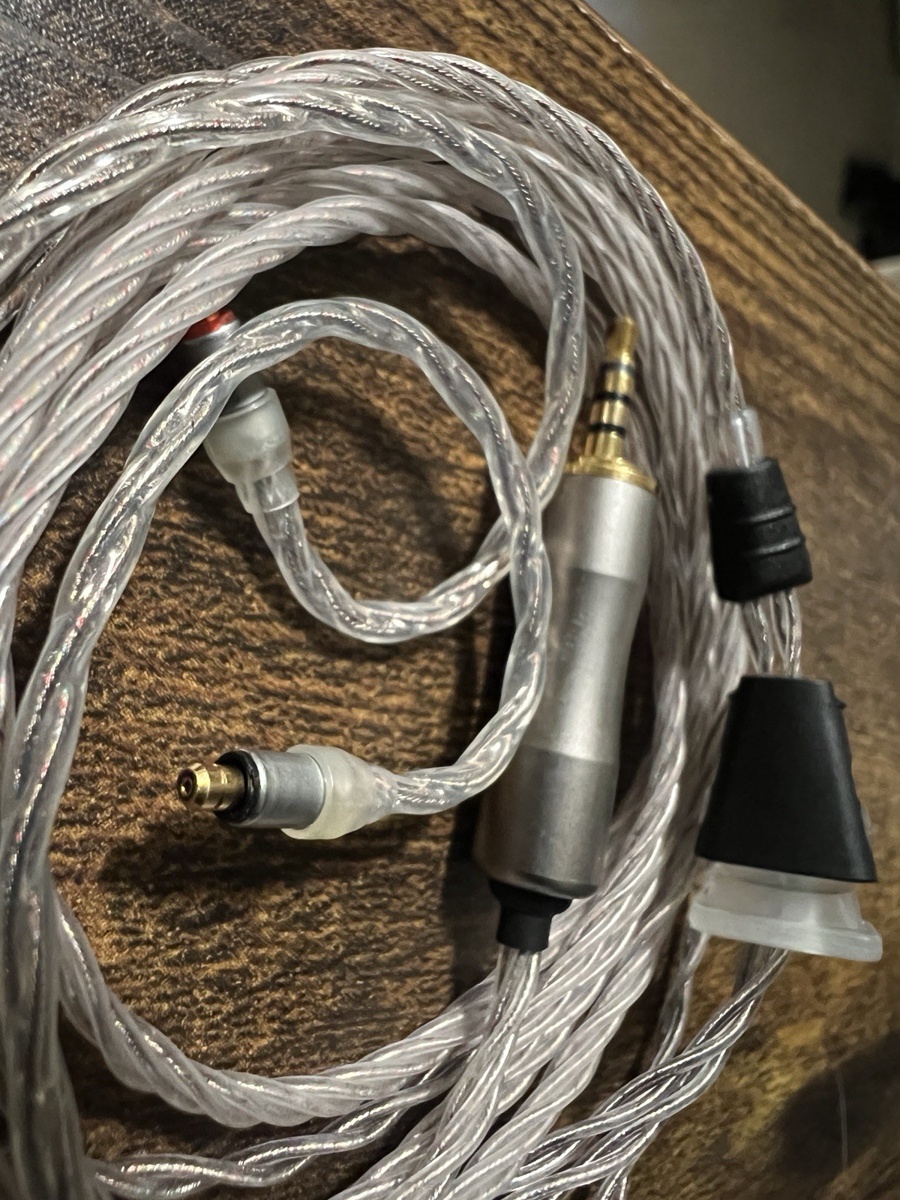

Photos from current listings. Actual item, color, and included accessories may vary.
Iem Cable Buying Guide
IEM cables are detachable 2-pin or MMCX leads that connect in-ear monitors to a source, and the real trade-off is conductor metallurgy and connector durability versus ergonomic stiffness and price. Buy a cable only to fix a specific problem: broken connector, microphonic noise, unbalanced termination mismatch, or a comfort issue with the stock cable. If your IEMs use a proprietary or recessed socket, confirm the exact connector standard first — a cable that fits one shell will not fit another.
Key takeaways
- Conductor material drives cost and sound character: OFC copper is the baseline, silver-plated OFC brightens treble, and pure silver or hybrid mixes are premium options with diminishing returns.
- Core count and geometry matter more than brand: 4-core is standard, 8-core adds flexibility, and 16-core braids like the Tripowin Zonie increase strand count for durability and handling rather than dramatic sound changes.
- Connector standard is non-negotiable: 0.78mm 2-pin fits most recessed and flush sockets, MMCX fits Shure/Westone-style shells, and T2/IPX or 2.5mm balanced terminations serve specific source and IEM families.
At a glance
- Category
- IEM Cables & Ear Tips
- Last updated
- Nov 23, 2026
Current offers
Highlights
- Conductor material drives cost and sound character: OFC copper is the baseline, silver-plated OFC brightens treble, and pure silver or hybrid mixes are premium options with diminishing returns.
- Core count and geometry matter more than brand: 4-core is standard, 8-core adds flexibility, and 16-core braids like the Tripowin Zonie increase strand count for durability and handling rather than dramatic sound changes.
- Connector standard is non-negotiable: 0.78mm 2-pin fits most recessed and flush sockets, MMCX fits Shure/Westone-style shells, and T2/IPX or 2.5mm balanced terminations serve specific source and IEM families.
- Plug termination must match your source: 3.5mm single-ended works with phones and dongles, while 2.5mm or 4.4mm balanced requires a player or amp with the matching output.
Best use cases
- Best fit: replace a failed or microphonic stock cable on a mainstream 0.78mm 2-pin IEM — choose a 4-core OFC or silver-plated cable with a 3.5mm plug for phone and dongle use.
- Best fit: upgrade ergonomics on heavy metal-shell IEMs — pick an 8-core or 16-core braided cable for flexibility and reduced cable noise, not for a sound transformation.
- Wrong fit: buying a 2-pin cable for an MMCX IEM or vice versa — check your shell's socket type before ordering; adapters exist but add bulk and failure points.
- Wrong fit: buying a 2.5mm or 4.4mm balanced cable for a source with only a 3.5mm output — you cannot adapt balanced down to single-ended safely without the right hardware.
Buying tips
- Match the connector precisely: 0.78mm 2-pin for most Chi-Fi IEMs, MMCX for Shure SE-series and Westone, and T2/IPX only for IEMs built with that standard.
- Choose conductor by goal: OFC copper for neutral warmth, silver-plated OFC for a brighter tilt, and pure silver or hybrid only if the rest of your chain is already resolving.
- Pick plug termination by source: 3.5mm single-ended for phones, laptops, and dongles; 2.5mm or 4.4mm balanced only for DAPs and amps with that output.
- Prioritize strain relief and connector housing quality over core count — a well-built 4-core outlasts a poorly assembled 16-core braid.
Specs
| Connector Type | 0.78mm 2-pin / MMCX / T2-IPX |
|---|---|
| Plug Termination | 3.5mm SE / 2.5mm / 4.4mm balanced |
| Conductor Material | OFC copper / silver-plated / pure silver |
| Core Count | 4-core / 8-core / 16-core braid |
Related searches
What to check before buying
- Confirm your IEM's socket type and depth — flush 0.78mm, recessed 0.78mm, or MMCX — since the wrong shell fit will not seat or will damage pins.
- Check your source's output jack: 3.5mm single-ended is universal, while 2.5mm and 4.4mm balanced require matching hardware.
- Measure cable length needs: 1.2m suits phone and dongle use, while 1.5m or longer suits desktop amps and studio setups.
- Inspect the IEM's cable channel and ear-hook shape — cables with pre-formed hooks or memory wire must match your shell's over-ear routing.
FAQ
Data sources: eBay / Amazon listings and product attribute feeds. Updated Nov 23, 2026.
Some links on this page are affiliate links. If you buy after clicking one, we may earn a commission at no extra cost to you. This does not change which products appear here or their order. Affiliate disclosure.