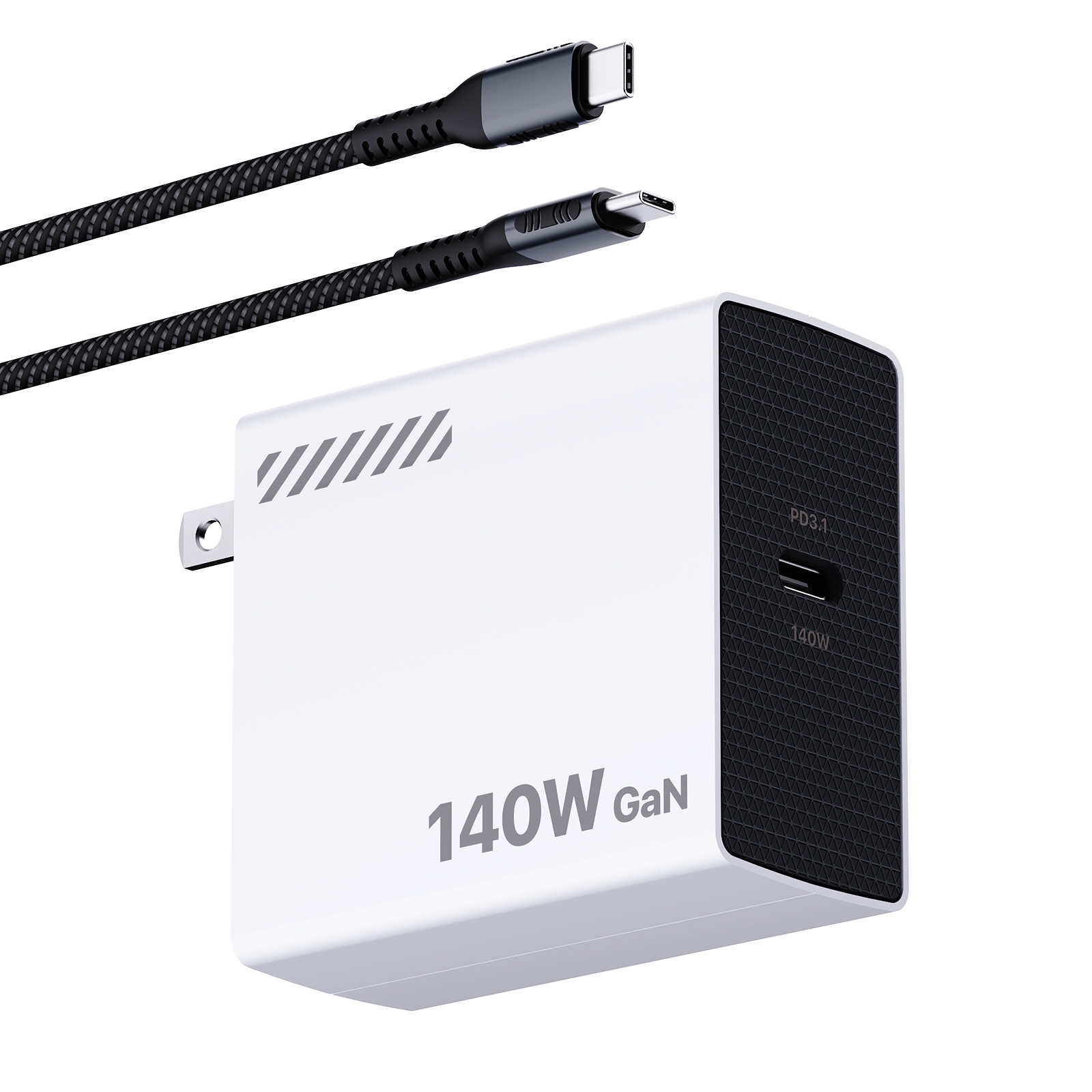

Photos from current listings. Actual item, color, and included accessories may vary.
USB C Power Adapter Buying Guide
A USB-C power adapter converts AC wall power into DC USB-C Power Delivery (PD), and the core trade-off is gallium nitride (GaN) vs silicon construction: GaN runs cooler and packs higher wattage into a smaller brick, while legacy silicon is cheaper but bulkier. The decisive rule is simple: buy a certified PD 3.0/3.1 adapter at or above your device's maximum draw, and skip any unbranded brick that cannot state its PD profile or safety certifications.
Key takeaways
- GaN (gallium nitride) transistors switch faster and waste less heat than silicon, enabling 65W-140W adapters at roughly half the volume of older chargers.
- PD 3.1 (USB PD Extended Power Range) unlocks 28V/36V/48V profiles up to 240W over EPR-certified cables; PD 3.0 caps practical laptop charging at 100W (20V/5A).
- Multi-port adapters use power-sharing: a 100W brick may split 65W + 30W when both ports are loaded, so total wattage is not per-port wattage.
At a glance
- Category
- Chargers, Power Banks & Adapters
- Last updated
- Nov 28, 2026
Current offers
Highlights
- GaN (gallium nitride) transistors switch faster and waste less heat than silicon, enabling 65W-140W adapters at roughly half the volume of older chargers.
- PD 3.1 (USB PD Extended Power Range) unlocks 28V/36V/48V profiles up to 240W over EPR-certified cables; PD 3.0 caps practical laptop charging at 100W (20V/5A).
- Multi-port adapters use power-sharing: a 100W brick may split 65W + 30W when both ports are loaded, so total wattage is not per-port wattage.
- Safety marks matter: UL/ETL listing, USB-IF certification, and full CC/CV protection circuitry separate legitimate adapters from uncertified clones.
Best use cases
- Best fit: a 30W-45W PD 3.0 GaN brick for phones and tablets — small enough for a pocket, enough for Samsung Super Fast Charging 2.0 and iPad fast charge.
- Best fit: a 65W-100W PD 3.0 dual-port GaN adapter for 13-14 inch ultrabooks and travel — one brick replaces laptop and phone chargers.
- Best fit: a 140W PD 3.1 GaN adapter for 16-inch performance laptops (MacBook Pro 16, Dell XPS 16) that genuinely draw above 100W under load.
- Wrong fit to skip: a 20W-30W adapter for a gaming or workstation laptop — it will charge slowly or not at all while the machine runs; and a 140W brick for a phone-only user, since phones cap acceptance around 25-45W.
Buying tips
- Add your device wattages: laptop charger wattage + phone wattage = minimum total adapter rating; for a 96W laptop plus 25W phone, buy 140W, not 100W.
- Match the PD profile, not just the number: a 100W adapter must supply 20V/5A, and 140W requires PD 3.1 with a 28V/5A EPR profile and an EPR-rated cable.
- Prefer GaN construction above 65W — at that tier silicon bricks become large and heat-soaked, while GaN keeps thermals and travel size in check.
- Check plug type and input range: folding US prongs suit US outlets, but international travel needs 100-240V input plus a regional plug or interchangeable plug heads.
Specs
| Construction | GaN vs silicon |
|---|---|
| PD Standard | PD 3.0 (100W) vs PD 3.1 (240W) |
| Wattage Tiers | 20-30W / 45-65W / 100-140W |
| Port Config | Single vs multi-port shared wattage |
Related searches
What to check before buying
- Confirm your device's maximum USB-C input wattage from its spec sheet or original charger label before choosing an adapter tier.
- Verify your charging cable is rated for the wattage: 100W needs a 5A e-marked cable, and 140W PD 3.1 requires an EPR-certified 240W cable.
- Check the adapter's plug format and input voltage (100-240V) against your outlets, travel plans, and whether you need folding prongs.
- Plan port count around simultaneous charging: two ports loaded means shared wattage, so size the total above the sum of your devices.
FAQ
Data sources: eBay / Amazon listings and product attribute feeds. Updated Nov 28, 2026.
Some links on this page are affiliate links. If you buy after clicking one, we may earn a commission at no extra cost to you. This does not change which products appear here or their order. Affiliate disclosure.