
Photos from current listings. Actual item, color, and included accessories may vary.
Cell Phone Power Bank Buying Guide
A cell phone power bank is a portable lithium-ion battery pack that recharges phones via USB-C or USB-A, with output wattage and cell capacity determining speed and longevity. The core trade-off is energy density versus charging speed: higher mAh packs more charge but adds weight, while higher PD wattage shrinks charge time but demands larger cells and better thermal design. Choose a bank rated for your phone's maximum PD or QC wattage and built with branded cells and metal or flame-retardant housing; skip no-name units with vague mAh claims and plastic shells.
Median $40.99
Key takeaways
- Output tiers separate usable speed: 20W PD matches iPhone fast charge, 30-45W covers most Android flagships, and 65W+ PD is required for laptop-class or ultra-fast phone charging.
- Real capacity is rated at 3.7V cell voltage; 20,000mAh delivers roughly 14,000-15,000mAh at 5V after conversion, enough for 3-4 full phone charges.
- USB-C Power Delivery (PD 3.0/PPS) is the compatibility standard; QC 3.0 remains relevant for older Android devices, while proprietary protocols like SuperVOOC need matching brand chargers.
At a glance
- Category
- Chargers, Power Banks & Adapters
- Last updated
- Nov 27, 2026
Current offers
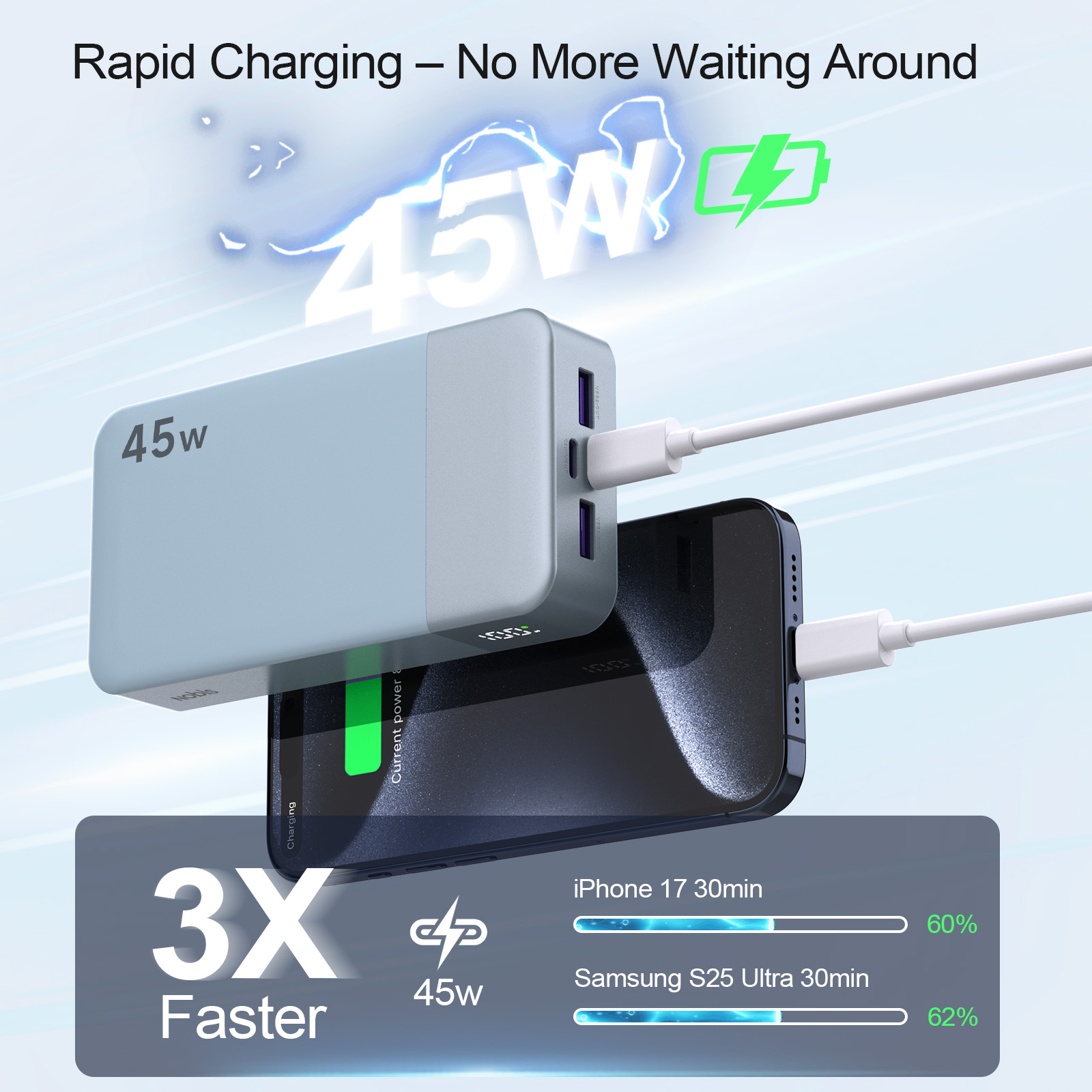 N OBIS 45W Fast Charging Power Bank 20000mAh Laotop Travel Essential Portable Cell Phone Charger With USB-C Input And Output$38.99View on Mallflare
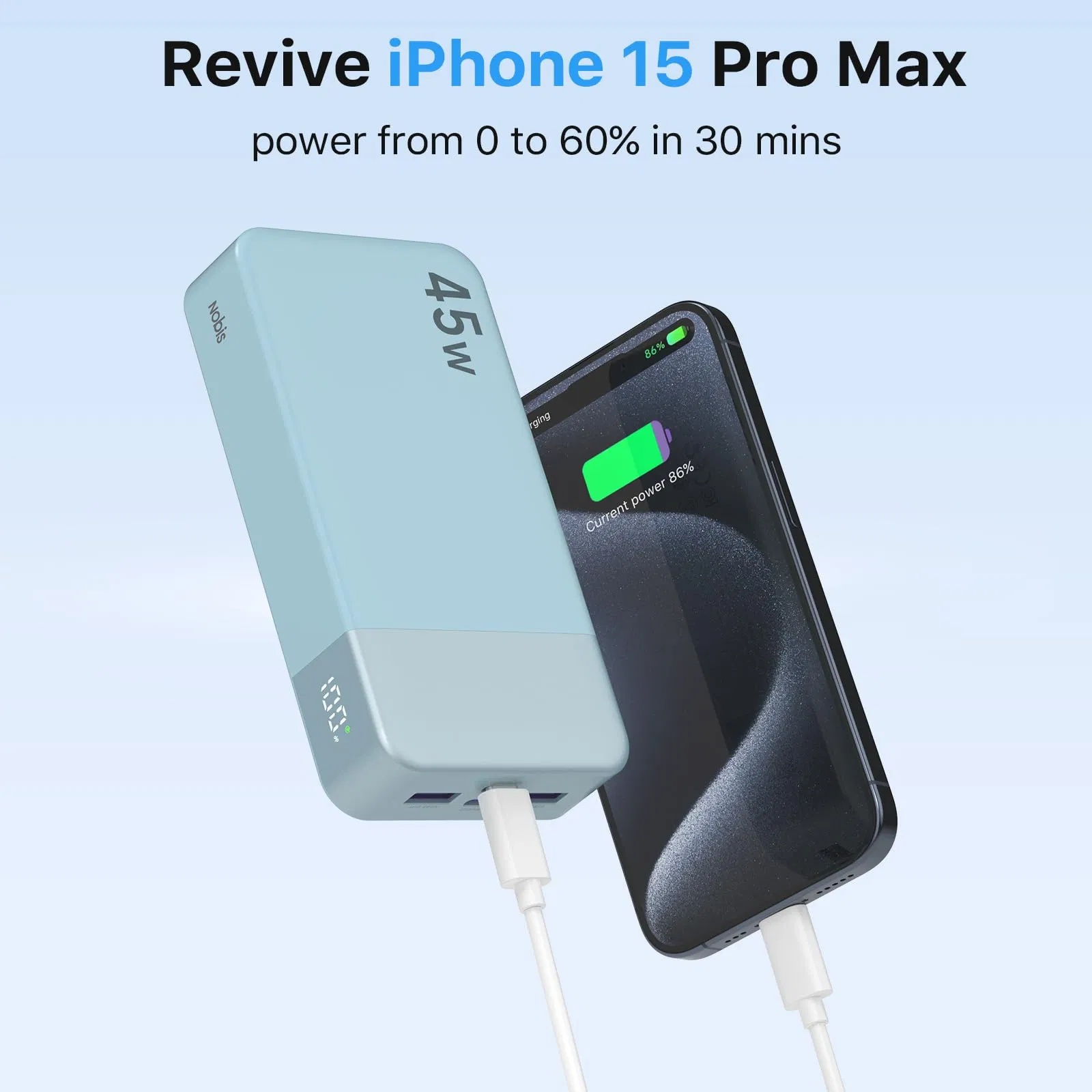 NOBIS 45W Fast Charging Power Bank 20000mAh Laotop Travel Essential Portable Cell Phone Charger With USB-C Input And Output$40.99View on Mallflare
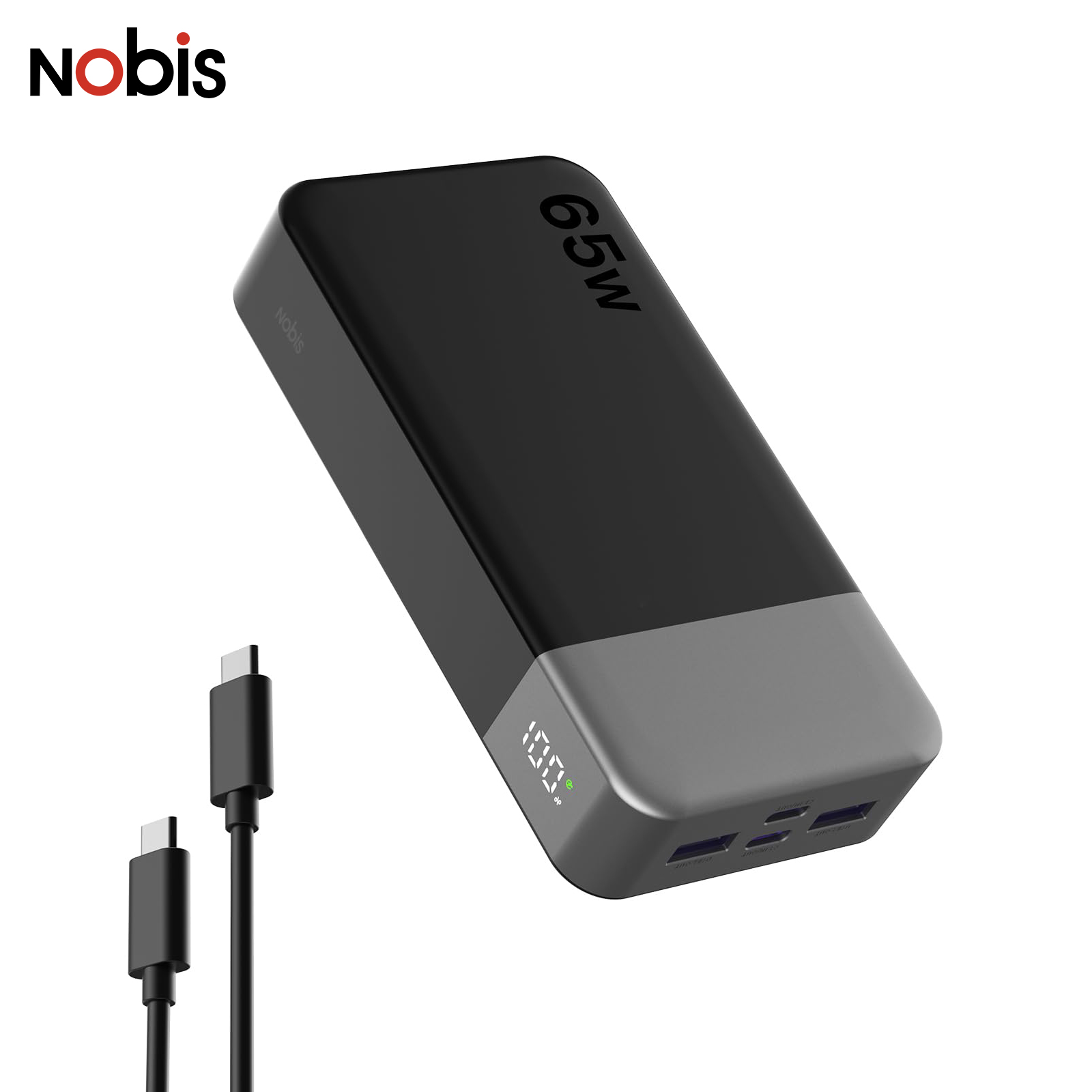 20000mAh 65W PD Portable Charger Power Bank, High Capacity USB C Fast Charging External Battery, Led Digital Display Support For Laptop, Cell Phones, Tablets$42.99View on Mallflare
Highlights
- Output tiers separate usable speed: 20W PD matches iPhone fast charge, 30-45W covers most Android flagships, and 65W+ PD is required for laptop-class or ultra-fast phone charging.
- Real capacity is rated at 3.7V cell voltage; 20,000mAh delivers roughly 14,000-15,000mAh at 5V after conversion, enough for 3-4 full phone charges.
- USB-C Power Delivery (PD 3.0/PPS) is the compatibility standard; QC 3.0 remains relevant for older Android devices, while proprietary protocols like SuperVOOC need matching brand chargers.
- Housing material affects durability and heat: aluminum or metal shells dissipate heat better under 45-65W loads, while ABS plastic is lighter but cracks and insulates heat.
Best use cases
- Daily commute and travel: pick a 10,000-20,000mAh, 20-30W PD bank with USB-C in/out and a digital display; skip 65W bricks that add weight without benefit.
- Laptop and tablet backup: choose 20,000mAh or higher with 45-65W PD output and at least 45W USB-C input for faster recharge; skip 10,000mAh units that cannot sustain laptop wattage.
- Outdoor and rugged use: select metal or flame-retardant housing with IP-rated ports and pass-through charging; skip slim plastic fashion banks that crack and overheat.
Buying tips
- Match output wattage to your phone's max PD draw: 20W for iPhone, 25-45W for Samsung/Pixel flagships, 65W+ only if you also charge laptops or tablets.
- Verify capacity math: divide mAh by your phone's battery mAh and multiply by 0.65-0.75 conversion efficiency to estimate real full charges.
- Prioritize USB-C PD 3.0 with PPS and at least one USB-C input/output port; dual USB-A-only banks cap at 12-18W and lack modern fast charging.
- Check cell grade and safety marks: UN38.3, CE, and FCC certification plus branded cells (LG, Samsung, Panasonic) signal real capacity and thermal safety.
Specs
| Capacity Tier | 10,000 / 20,000mAh (37-74Wh) |
|---|---|
| Output Wattage | 20W / 30-45W / 65W PD |
| Fast-Charge Protocol | USB-C PD 3.0 + PPS / QC 3.0 |
| Housing Material | Aluminum / ABS plastic / carbon fiber |
Related searches
What to check before buying
- Confirm your phone's maximum charging wattage and protocol (PD, PPS, QC) so the bank's output tier actually triggers fast charge.
- Measure your bag or pocket: 20,000mAh banks typically weigh 350-450g and measure 150x70x25mm; 10,000mAh units are roughly half that.
- Check airline rules: most carriers cap carry-on lithium batteries at 100Wh (about 27,000mAh) and require UN38.3 labeling.
- Verify you own a USB-C PD wall charger of at least the bank's input wattage to recharge it in reasonable time.
FAQ
Data sources: eBay / Amazon listings and product attribute feeds. Updated Nov 27, 2026.
Some links on this page are affiliate links. If you buy after clicking one, we may earn a commission at no extra cost to you. This does not change which products appear here or their order. Affiliate disclosure.