
Photos from current listings. Actual item, color, and included accessories may vary.
Cell Phone Charger Buying Guide
A cell phone charger is either a wall adapter (AC-to-DC) or a battery pack (DC power bank) that delivers regulated USB power to your phone. The core trade-off is charging speed versus thermal and battery longevity: fast-charging adapters and power banks push higher wattage, but sustained high-current delivery accelerates cell degradation and requires matched cable/port standards. Choose a charger with a certified USB-PD or Quick Charge controller and at least 20W per port for modern phones; skip unrated multi-port hubs that split total wattage across outputs.
Median $34.49
Key takeaways
- USB Power Delivery (PD) 3.0 with PPS is the baseline for iPhone and Android fast charging; adapters must expose 9V/2.22A or 11V/3A profiles to hit 20W+ per device.
- Power bank capacity in mAh is rated at 3.7V cell voltage; a 20,000mAh pack delivers roughly 74Wh, which after conversion losses yields about 3-4 full phone charges, not 5-6.
- Multi-port desktop hubs share a fixed total wattage (e.g., 60W across 12 ports); a single phone may receive only 5-12W when all ports are occupied, so per-port allocation matters more than port count.
At a glance
- Category
- Chargers, Power Banks & Adapters
- Last updated
- Nov 27, 2026
Current offers
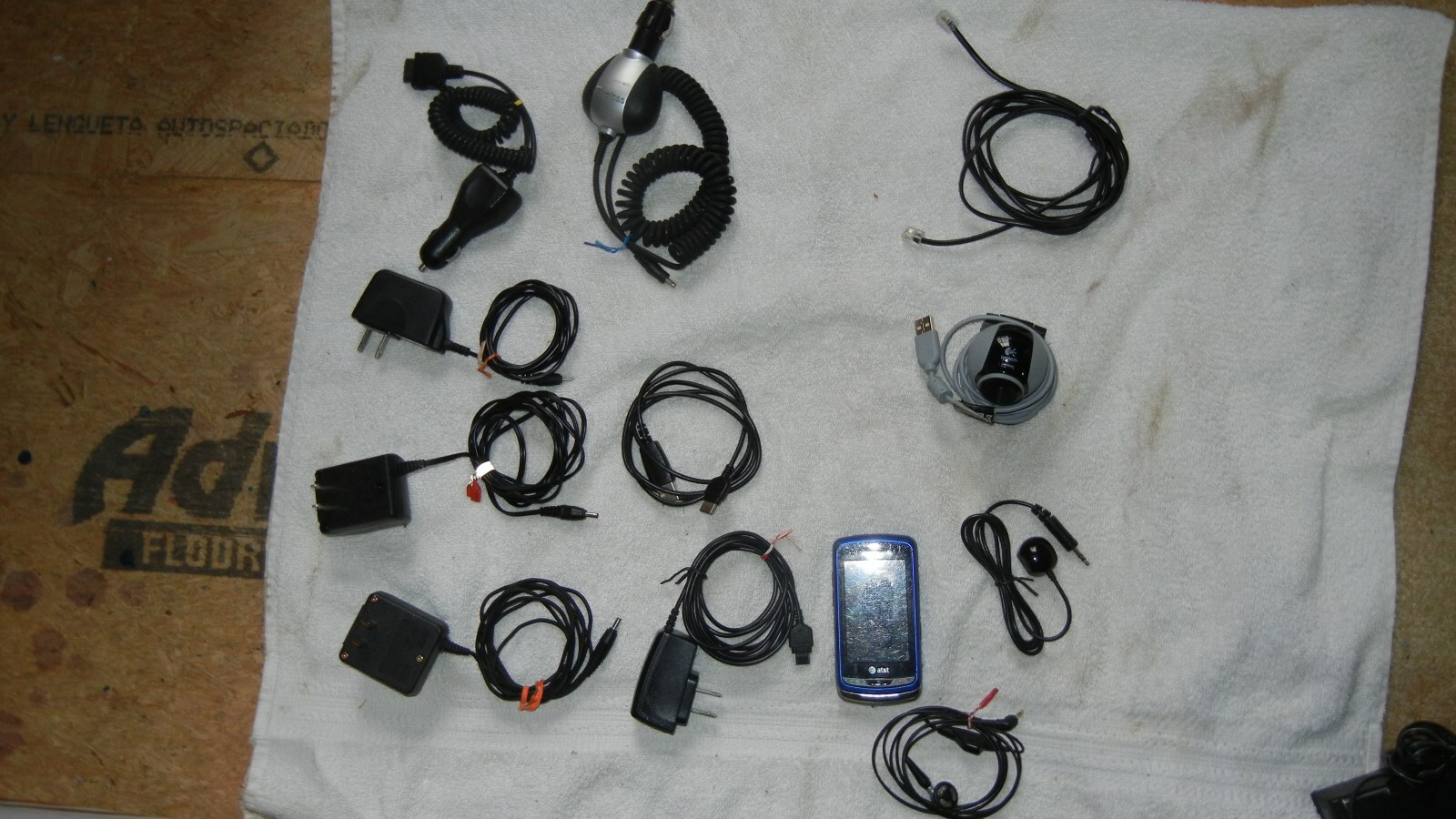 Computer and phone peripherals, power supplies, phone chargers and a cell phone$25.00Last checked Nov 20, 2026View on eBay
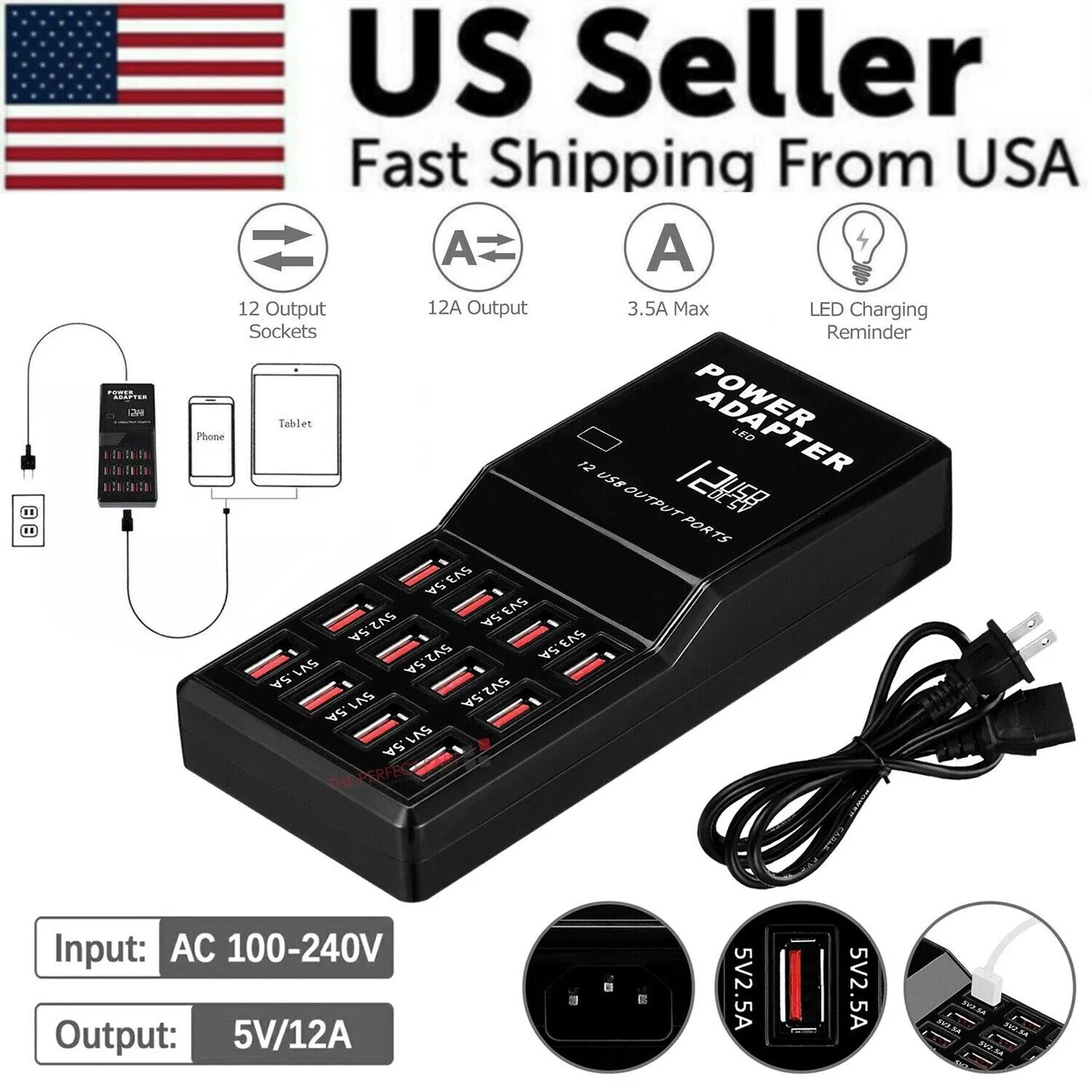 Multi 12 Port USB Charging Station Hub Desktop Wall Cell Phone Charger Organizer$29.99View on Mallflare
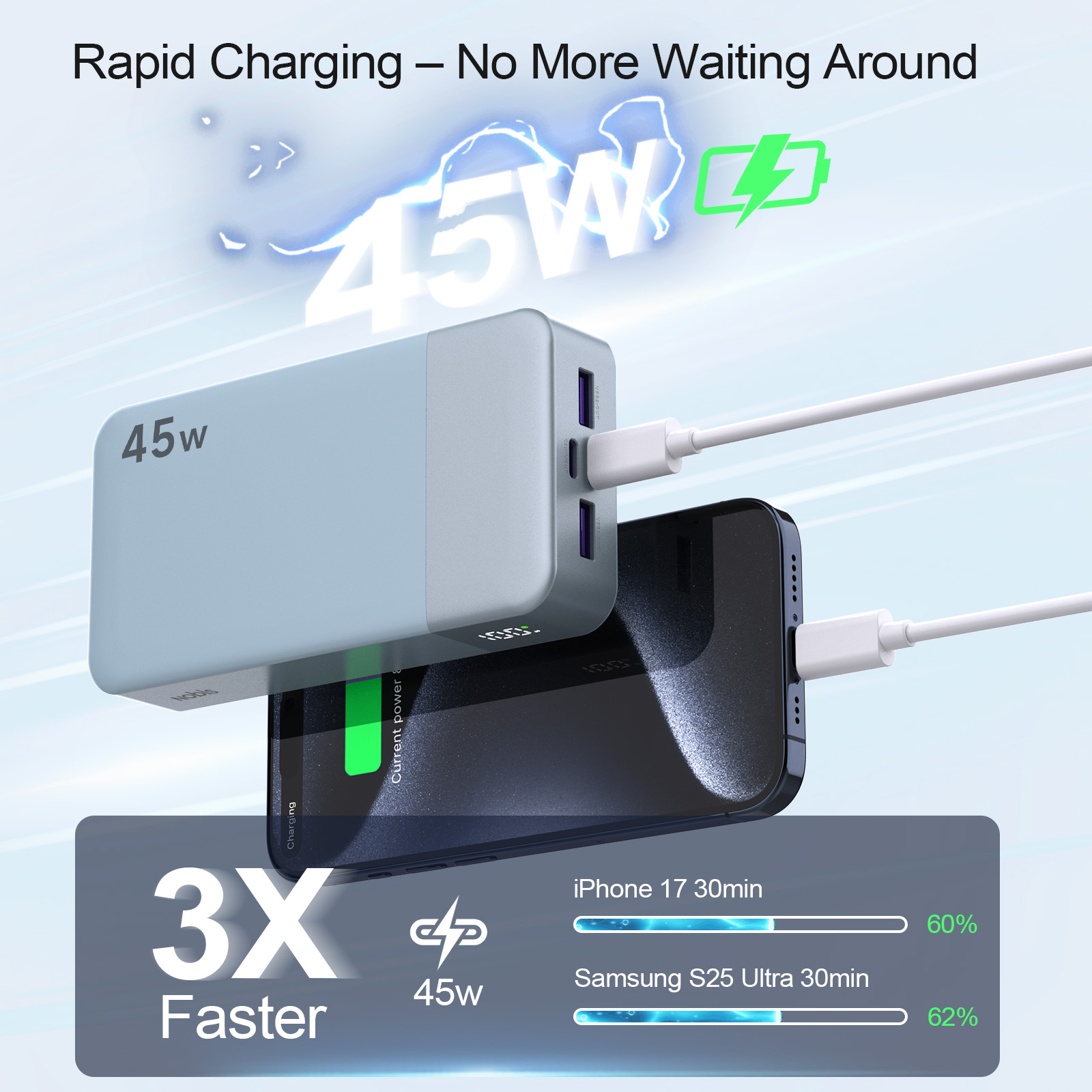 N OBIS 45W Fast Charging Power Bank 20000mAh Laotop Travel Essential Portable Cell Phone Charger With USB-C Input And Output$38.99View on Mallflare
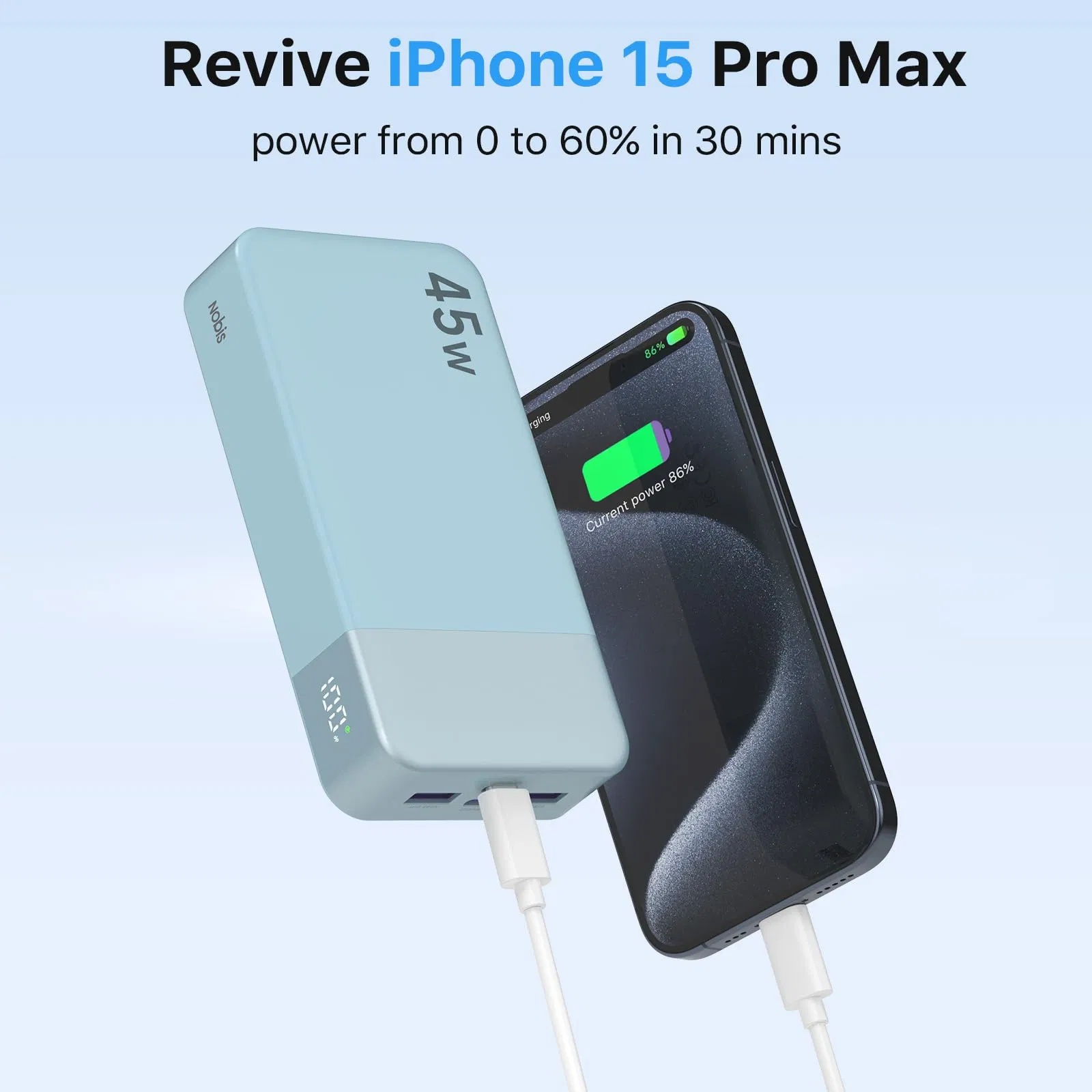 NOBIS 45W Fast Charging Power Bank 20000mAh Laotop Travel Essential Portable Cell Phone Charger With USB-C Input And Output$40.99View on Mallflare
Highlights
- USB Power Delivery (PD) 3.0 with PPS is the baseline for iPhone and Android fast charging; adapters must expose 9V/2.22A or 11V/3A profiles to hit 20W+ per device.
- Power bank capacity in mAh is rated at 3.7V cell voltage; a 20,000mAh pack delivers roughly 74Wh, which after conversion losses yields about 3-4 full phone charges, not 5-6.
- Multi-port desktop hubs share a fixed total wattage (e.g., 60W across 12 ports); a single phone may receive only 5-12W when all ports are occupied, so per-port allocation matters more than port count.
- GaN (gallium nitride) adapters run cooler and smaller than silicon chargers at the same wattage, but cheap GaN designs often lack proper isolation; look for UL/ETL or CE certification marks.
Best use cases
- Best fit: a single 20W-30W USB-C PD wall adapter with a certified cable for nightly bedside charging—small, cool, and matched to one phone. Skip 12-port hubs unless you are charging a family's devices simultaneously.
- Best fit: a 10,000-20,000mAh power bank with 30W+ USB-C PD output for commute or travel, sized to your phone's battery (5,000mAh phone needs ~2.5x capacity for two charges). Skip 65W laptop-class banks if you only charge phones—they add weight and cost with no phone benefit.
- Best fit: a multi-port desktop charging station for a household with 4+ devices, accepting that total wattage is shared and phones may slow-charge when all ports are active. Wrong fit: fast-charging a single flagship from a 12-port hub—dedicated single-port adapters deliver higher sustained wattage.
- Best fit: a carbon-fiber or metal-shell power bank for rugged travel, where drop and heat resistance matter. Wrong fit: plastic-shell budget banks for high-vibration environments like cycling or job sites—internal solder joints fail first.
Buying tips
- Match wattage to your phone's max input: iPhone 15/16 peaks at ~27W, most Android flagships at 25-45W wired; a 30W PD adapter covers both, while 65W+ only benefits laptops or tablets.
- For power banks, divide rated mAh by your phone's battery mAh and multiply by 0.6-0.65 (conversion efficiency) to estimate real full charges; a 20,000mAh bank gives roughly 3 charges on a 4,500mAh phone.
- Check the port standard: USB-C PD requires a C-to-C cable for full wattage; USB-A ports with Quick Charge top out at 18W and need a QC-capable A-to-C cable.
- Prefer adapters with independent per-port controllers or clearly labeled total-wattage allocation; a 12-port hub rated 60W total means 5W per port if all are used, which won't fast-charge any modern phone.
Specs
| Charger Type | AC wall adapter / DC power bank |
|---|---|
| Max Output | 20W-30W phone / 45W-65W multi-device |
| Fast-Charge Standard | USB-PD 3.0 PPS / QC 4+ |
| Power Bank Capacity | 10,000-20,000mAh (~37-74Wh) |
What to check before buying
- Measure your phone's charging port and cable: confirm USB-C vs Lightning and that your cable is rated for the wattage (60W/100W e-marked C-to-C for PD).
- For a desktop hub, count simultaneous devices and add their wattage needs; ensure the hub's total output exceeds the sum, or accept slow charging.
- For a power bank, check airline carry-on limits: 20,000mAh (~74Wh) is under the 100Wh FAA/TSA threshold; 27,000mAh (~100Wh) is the ceiling without airline approval.
- Verify plug type and voltage for your region (US Type A/B 120V, EU Type C/F 230V); travel adapters must be rated for the charger's input voltage range, typically 100-240V.
FAQ
Data sources: eBay / Amazon listings and product attribute feeds. Updated Nov 27, 2026.
Some links on this page are affiliate links. If you buy after clicking one, we may earn a commission at no extra cost to you. This does not change which products appear here or their order. Affiliate disclosure.