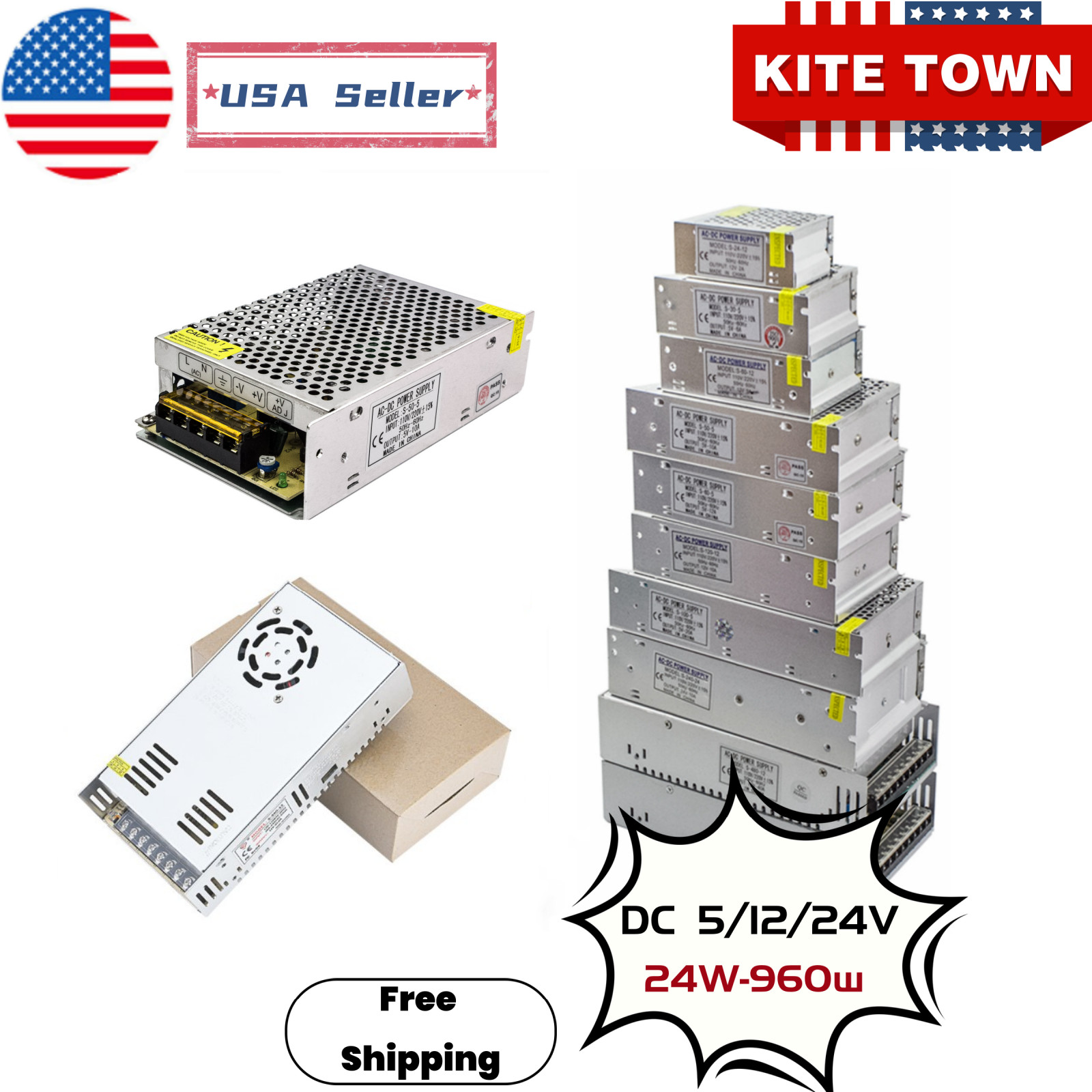

Photos from current listings. Actual item, color, and included accessories may vary.
AC Power Adapter Buying Guide
AC power adapters convert mains AC into a regulated low-voltage DC output, and the decisive trade-off is between generic unregulated wall-warts and properly certified regulated switching supplies. Buy only adapters that state output voltage, minimum current, polarity, and a safety mark (UL/ETL/CE); skip any unit missing those four facts, regardless of connector fit.
Key takeaways
- Switching (SMPS) adapters hold voltage within roughly ±5% from no-load to full-load; older unregulated transformer types drift well above nominal at light load and can cook sensitive electronics.
- Current rating is a ceiling, not a push: a 12V 5A adapter safely runs a 12V 1A device, but a 12V 1A adapter will brown out or overheat on a 12V 3A load.
- Barrel connectors share a 5.5 mm outer diameter but differ in inner pin (2.1 mm vs 2.5 mm) and polarity—center-positive is the consumer norm, center-negative appears on some audio gear.
At a glance
- Category
- Chargers, Power Banks & Adapters
- Last updated
- Nov 28, 2026
Current offers
Highlights
- Switching (SMPS) adapters hold voltage within roughly ±5% from no-load to full-load; older unregulated transformer types drift well above nominal at light load and can cook sensitive electronics.
- Current rating is a ceiling, not a push: a 12V 5A adapter safely runs a 12V 1A device, but a 12V 1A adapter will brown out or overheat on a 12V 3A load.
- Barrel connectors share a 5.5 mm outer diameter but differ in inner pin (2.1 mm vs 2.5 mm) and polarity—center-positive is the consumer norm, center-negative appears on some audio gear.
- Certification matters: UL/ETL listing means the adapter passed overcurrent, temperature, and enclosure testing; uncertified no-name bricks are the usual cause of melted plugs and house fires.
Best use cases
- Ride-on toy or LED strip replacement: match the original 12V rating, meet or exceed its amp figure, and confirm center-positive barrel polarity—buy a certified 12V SMPS at the same or higher current.
- Computer peripheral or conference camera (e.g., Aver CAM520-class): use the exact voltage and connector the device specifies; a 12V 3A adapter will not substitute for a 19V laptop supply, and vice versa.
- Skip generic 'universal' multi-tip adapters for anything with a battery or precision electronics—fixed-voltage certified supplies avoid wrong-tip and wrong-polarity damage.
Buying tips
- Size current with 20-30% headroom: pick an adapter rated at least 1.2× the device's required amps (e.g., 12V 2A device → 12V 3A adapter) to run cooler.
- Measure the barrel: 5.5×2.1 mm and 5.5×2.5 mm look identical but will not mate reliably; check the device jack or original plug with calipers.
- Confirm polarity before plugging in—center-positive is standard, but reversed polarity instantly destroys unprotected electronics.
- Prefer 100-240V input switching supplies for travel and resale; fixed 110V-only transformer bricks are heavier and unsafe on 220V mains.
Specs
| Adapter Type | Switching SMPS vs transformer |
|---|---|
| Output Voltage | 5V / 12V / 24V DC fixed |
| Current Rating | 1A to 5A+ (match or exceed) |
| Barrel Connector | 5.5×2.1 mm or 5.5×2.5 mm |
Related searches
What to check before buying
- Read the device label or original adapter for output voltage, minimum current, and polarity symbol.
- Measure the barrel outer and inner diameter, or match the exact plug type listed for the device.
- Verify the adapter carries UL, ETL, or equivalent certification and lists input voltage range.
- Check the physical clearance: adapter body size and cable length must reach the outlet without strain.
FAQ
Data sources: eBay / Amazon listings and product attribute feeds. Updated Nov 28, 2026.
Some links on this page are affiliate links. If you buy after clicking one, we may earn a commission at no extra cost to you. This does not change which products appear here or their order. Affiliate disclosure.