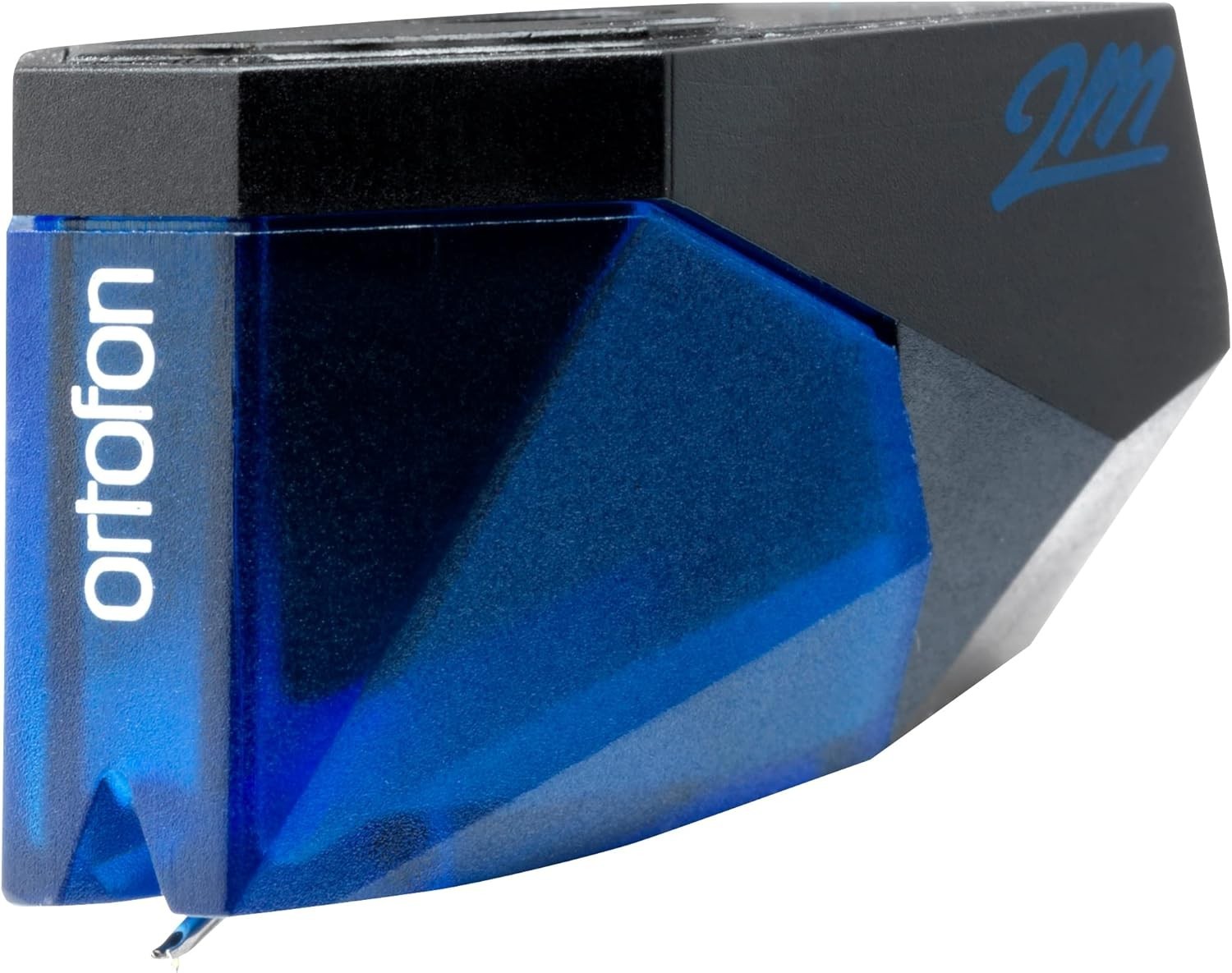

Photos from current listings. Actual item, color, and included accessories may vary.
Moving Magnet Phono Cartridge Buying Guide
A moving magnet (MM) phono cartridge is the plug-and-play transducer most turntables use, generating about 3–6 mV output via a fixed magnet and replaceable stylus. The core trade-off is stylus profile and cantilever rigidity versus compliance matching: advanced line-contact or Shibata tips extract more detail but demand precise alignment, while bonded ellipticals and conical tips tolerate setup slop. Buy by output voltage (>4 mV suits budget phono stages), recommended tracking force (1.8–2.0 g for most modern MMs), and compliance that matches your tonearm's effective mass.
Key takeaways
- Output voltage typically 3.0–6.0 mV; stages with <40 dB gain need ≥4 mV carts to avoid noise-floor hiss.
- Stylus profile tiers: bonded spherical (conical) < bonded elliptical < nude elliptical < nude line-contact/Shibata for groove detail and wear.
- Compliance (8–25 µm/mN) must match tonearm effective mass; high-compliance MM carts suit light 8–12 g arms, low-compliance suit 15–20 g arms.
At a glance
- Category
- Cartridges & Phono Preamps
- Last updated
- Nov 23, 2026
Current offers
Highlights
- Output voltage typically 3.0–6.0 mV; stages with <40 dB gain need ≥4 mV carts to avoid noise-floor hiss.
- Stylus profile tiers: bonded spherical (conical) < bonded elliptical < nude elliptical < nude line-contact/Shibata for groove detail and wear.
- Compliance (8–25 µm/mN) must match tonearm effective mass; high-compliance MM carts suit light 8–12 g arms, low-compliance suit 15–20 g arms.
- Ortofon 2M series uses one generator body across Red/Blue/Bronze/Black, so stylus upgrades swap without re-aligning the cartridge.
Best use cases
- Best fit: budget-to-mid turntables with fixed headshells and built-in phono stages — pick a 5 mV bonded elliptical like the 2M Red tier for easy gain and forgiving alignment.
- Best fit: critical listening on medium-mass tonearms with adjustable VTA/azimuth — step to nude line-contact (2M Blue/Bronze class) for lower distortion and longer stylus life.
- Wrong fit: DJ scratch setups and back-cueing — skip exposed fine-line styli; use conical or reinforced DJ carts rated for high tracking force and reverse play.
- Wrong fit: low-mass 7–9 g arms paired with stiff low-compliance carts — mismatch causes resonance near 6–8 Hz; choose high-compliance MM models instead.
Buying tips
- Match cartridge compliance to arm mass: use the 10 Hz resonance formula (f = 1000 / (2π√(M×C))) and aim for 8–12 Hz in practice.
- Budget for a phono stage with ≥40 dB MM gain and 47 kΩ/100–200 pF loading; capacitance mismatch brightens or dulls the top end.
- Prefer nude-mounted styli over bonded for longer wear and cleaner high frequencies; bonded tips are fine for casual play and lower-cost replacement.
- Buy a cartridge with a user-replaceable stylus if you plan to keep the generator long-term — full-body replacement costs more than a stylus swap.
Specs
| Output Voltage | 3.0–6.0 mV (MM standard) |
|---|---|
| Stylus Profile | Conical / Elliptical / Line-contact |
| Tracking Force | 1.5–2.5 g typical |
| Compliance | 8–25 µm/mN (arm-match dependent) |
Related searches
What to check before buying
- Confirm your tonearm's effective mass (spec sheet) and headshell weight capacity before choosing compliance.
- Measure your phono stage's MM gain and input capacitance; low-gain stages need higher-output carts.
- Verify mounting standard: standard 1/2-inch centers with 6–8 mm cartridge height for VTA range.
- Check tracking force range against your arm's counterweight capability and anti-skate adjustment.
FAQ
Data sources: eBay / Amazon listings and product attribute feeds. Updated Nov 23, 2026.
Some links on this page are affiliate links. If you buy after clicking one, we may earn a commission at no extra cost to you. This does not change which products appear here or their order. Affiliate disclosure.