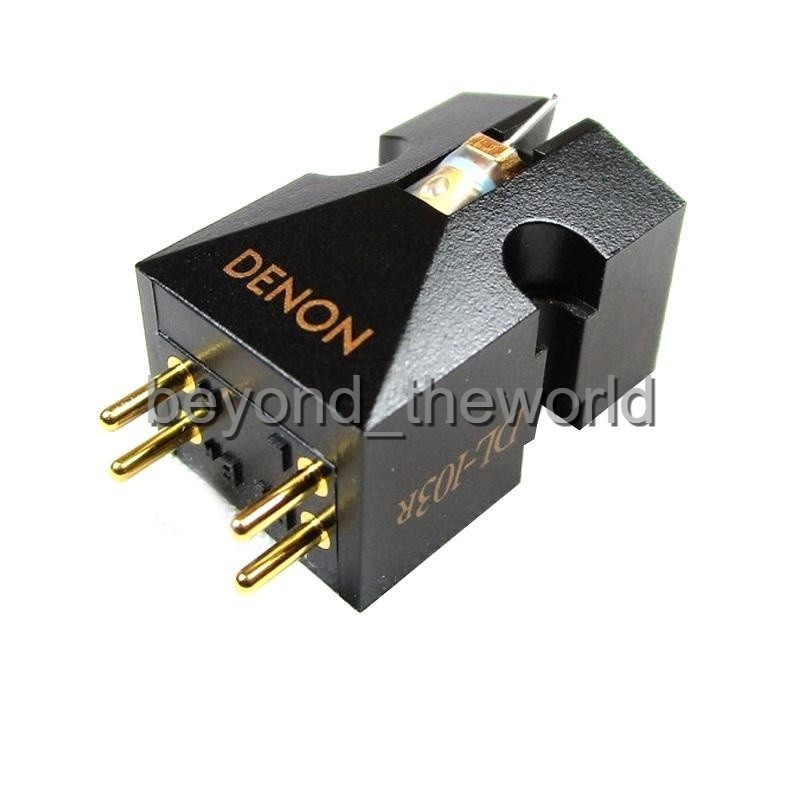

Photos from current listings. Actual item, color, and included accessories may vary.
Mc Cartridge Buying Guide
Moving coil (MC) cartridges use a tiny coil at the stylus tip to deliver lower moving mass and higher resolution than moving magnet designs, but they demand a phono stage with 60–70 dB of gain and often a step-up transformer. The core trade-off is compliance versus arm mass and output voltage versus noise: low-output MCs (0.2–0.5 mV) need premium head amps, while high-output MCs (1.5–2.5 mV) run on standard MM inputs with slightly less refinement.
Median $400.71
Key takeaways
- Low-output MC (0.2–0.5 mV) requires 60–70 dB phono gain or a 1:10–1:20 step-up transformer; high-output MC (1.5–2.5 mV) works on 40–50 dB MM inputs.
- Boron or ruby cantilevers with fine-line/Geiger stylus profiles trace high frequencies better than aluminum/elliptical, but cost more and need precise alignment.
- Denon DL-103 family (DL-103, DL-103R) uses a conical stylus and 0.25 mV output—rugged, musical, but needs 100+ hours break-in and a heavy arm.
At a glance
- Category
- Cartridges & Phono Preamps
- Last updated
- Nov 23, 2026
Current offers
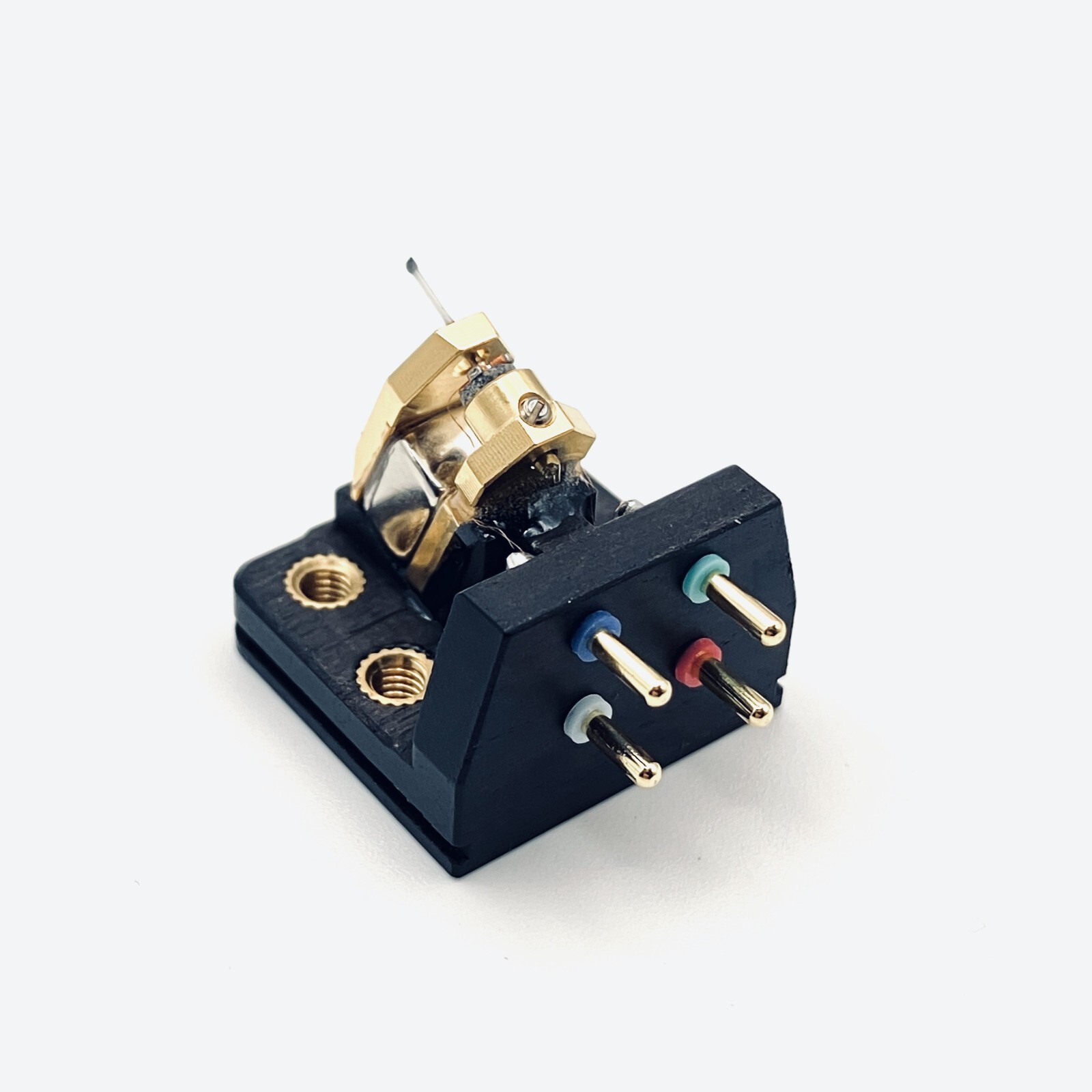
Highlights
- Low-output MC (0.2–0.5 mV) requires 60–70 dB phono gain or a 1:10–1:20 step-up transformer; high-output MC (1.5–2.5 mV) works on 40–50 dB MM inputs.
- Boron or ruby cantilevers with fine-line/Geiger stylus profiles trace high frequencies better than aluminum/elliptical, but cost more and need precise alignment.
- Denon DL-103 family (DL-103, DL-103R) uses a conical stylus and 0.25 mV output—rugged, musical, but needs 100+ hours break-in and a heavy arm.
- Compliance below 12 µm/mN suits medium-to-high-mass arms (12–20 g effective mass); high-compliance MCs above 15 µm/mN suit low-mass arms.
Best use cases
- Best for vinyl listeners with a dedicated MC phono stage or step-up transformer and a medium-mass tonearm—pick low-output MC for maximum detail.
- Choose high-output MC if your integrated amp or receiver has only MM input and you want MC character without adding a head amp.
- Skip MC entirely if your turntable has a fixed low-mass arm or no adjustable counterweight—stick to MM until you can set VTA and tracking force precisely.
- For DJ or heavy back-cueing use, avoid exposed fine-line MC styli and pick a conical MC or stay with DJ-grade MM.
Buying tips
- Match cartridge compliance to arm effective mass: low-compliance MC (under 12 µm/mN) on 12–20 g arms; high-compliance (over 15) on under 10 g arms.
- Budget for a phono stage with at least 60 dB gain for 0.2–0.5 mV MCs, or add a 1:10 step-up transformer; MM-only stages will sound thin and noisy.
- Allow 50–100 hours break-in for nude MC styli; initial brightness and channel imbalance settle after 20–30 hours.
- Verify stylus replacement cost before buying: re-tipping MCs runs high, so pick models with factory rebuild programs or budget for a new cartridge.
Specs
| Output Level | Low 0.2–0.5 mV / High 1.5–2.5 mV |
|---|---|
| Compliance | Low <12 / High >15 µm/mN |
| Stylus Profile | Conical / Elliptical / Fine-line |
| Cantilever | Aluminum / Boron / Ruby |
Related searches
What to check before buying
- Measure tonearm effective mass (or identify arm model) and confirm it falls in the 12–20 g range for low-compliance MCs.
- Check phono stage gain and loading options: MC needs 60–70 dB gain and 100–1 kΩ loading adjustability.
- Confirm your turntable allows VTA adjustment and tracking force down to 1.8–2.5 g for most MCs.
- Verify headshell weight and cartridge body height clear your tonearm's counterweight and cueing mechanism.
FAQ
Data sources: eBay / Amazon listings and product attribute feeds. Updated Nov 23, 2026.
Some links on this page are affiliate links. If you buy after clicking one, we may earn a commission at no extra cost to you. This does not change which products appear here or their order. Affiliate disclosure.