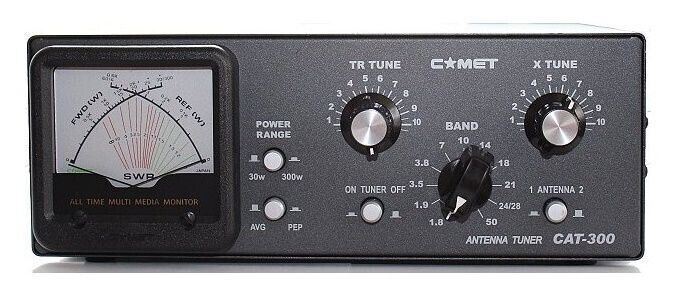

Photos from current listings. Actual item, color, and included accessories may vary.
Comet CAT-300 Buying Guide
The Comet CAT-300 is a manual antenna tuner covering 1.8–50 MHz with a 300 W PEP SSB rating, using a conventional T-network with tapped inductor and variable capacitors. The core trade-off is manual tuning versus automatic tuning: manual tuners offer wide matching range and no control logic failure points, but require operator skill and a tuning procedure on every band or antenna change. Choose the CAT-300 if you want a low-loss, wide-range matching network for HF plus 6 m at moderate power; skip it if you need push-button band switching, memory tuning, or QRO-level headroom above 300 W PEP.
Key takeaways
- T-network architecture: tapped roller or switched inductor plus two variable capacitors matches a broad impedance range, including random wires and short verticals, without band-specific presets.
- Power ceiling: 300 W PEP SSB is the rated limit; FM, RTTY, and digital modes require substantial derating, typically to around 100–150 W carrier, because tuning and continuous duty raise average dissipation.
- Coverage: 1.8–50 MHz spans 160 m through 6 m in one unit, with UHF (SO-239) connectors on both input and output for standard PL-259 coax terminations.
At a glance
- Category
- Antenna Tuners & SWR Meters
- Status
- Listings available
- Last updated
- Nov 23, 2026
Current offers
Highlights
- T-network architecture: tapped roller or switched inductor plus two variable capacitors matches a broad impedance range, including random wires and short verticals, without band-specific presets.
- Power ceiling: 300 W PEP SSB is the rated limit; FM, RTTY, and digital modes require substantial derating, typically to around 100–150 W carrier, because tuning and continuous duty raise average dissipation.
- Coverage: 1.8–50 MHz spans 160 m through 6 m in one unit, with UHF (SO-239) connectors on both input and output for standard PL-259 coax terminations.
- Manual operation: tuning is by front-panel controls and an internal or external SWR bridge; there is no auto-tune motor, no memory, and no transceiver feedback loop, so the operator sets and confirms match at low power first.
Best use cases
- Best fit: HF-6 m operators running 100 W-class transceivers into wire antennas, end-fed random wires, or multiband doublets who want a wide matching range and accept a manual tune before each band change.
- Best fit: portable and field-day stations where a passive, no-firmware tuner is preferred and the operator tunes by ear or with a separate SWR meter at reduced power.
- Wrong fit: QRO stations running amplifiers above 300 W PEP or continuous-duty digital modes at full power; choose a 1 kW-rated or auto-tuner with higher dissipation instead.
- Wrong fit: operators who expect one-button band changes or remote operation; an automatic tuner with memory and transceiver integration is the correct category.
Buying tips
- Match the tuner rating to your worst-case mode, not your peak SSB figure: derate 300 W PEP to roughly 100–150 W carrier for FM, RTTY, and FT8.
- Plan for manual tuning discipline: always tune at low power (10–20 W) first, then raise power only after SWR is flat, or the internal network can see arcing voltages.
- Confirm connector and coax standard: SO-239 UHF jacks mate with PL-259 plugs; use 50-ohm coax throughout and avoid 75-ohm feedline without a matching transformer.
- Verify your antenna's impedance range against a T-network's capability; extremely low impedances (short verticals) and high impedances (long wires) are both within range, but balanced feedlines require an external balun.
Specs
| Tuner Type | Manual T-network, front-panel controls |
|---|---|
| Frequency Coverage | 1.8–50 MHz (160–6 m) |
| Power Rating | 300 W PEP SSB; derate for continuous |
| Connectors | SO-239 UHF input/output, 50 ohm |
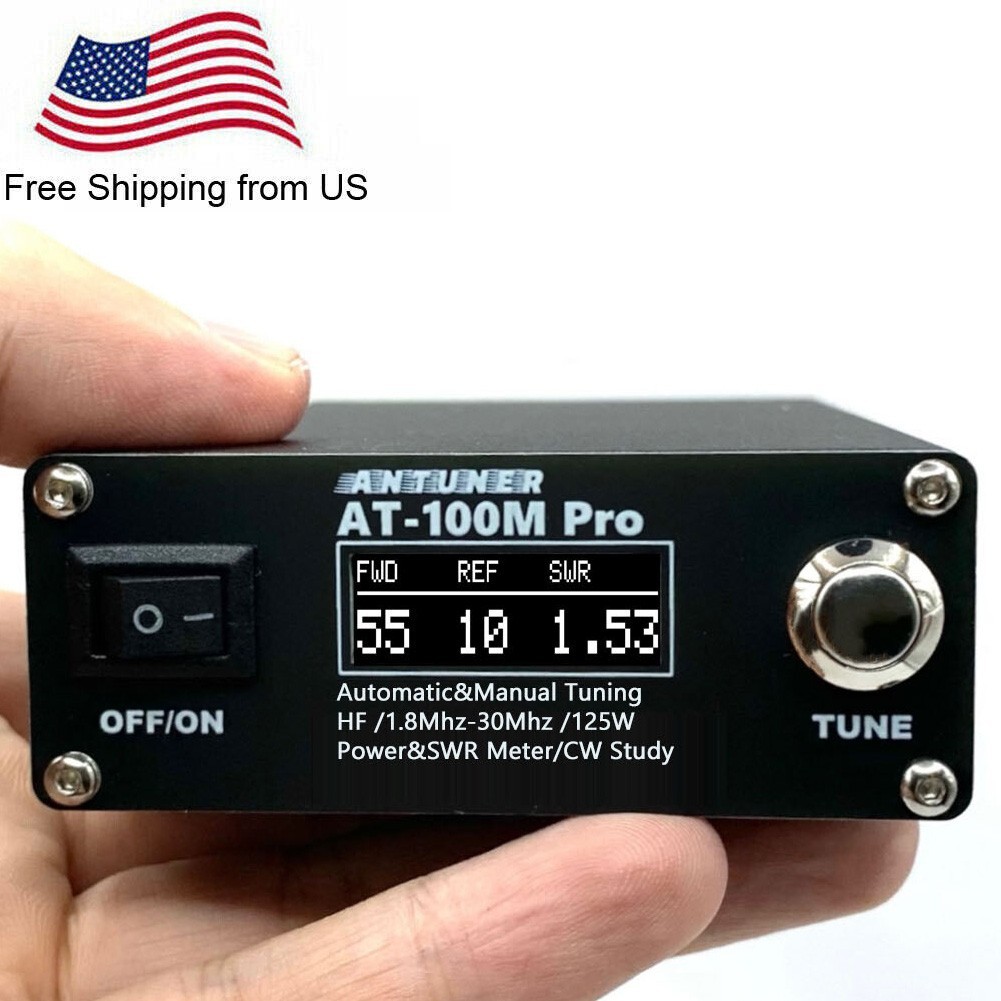
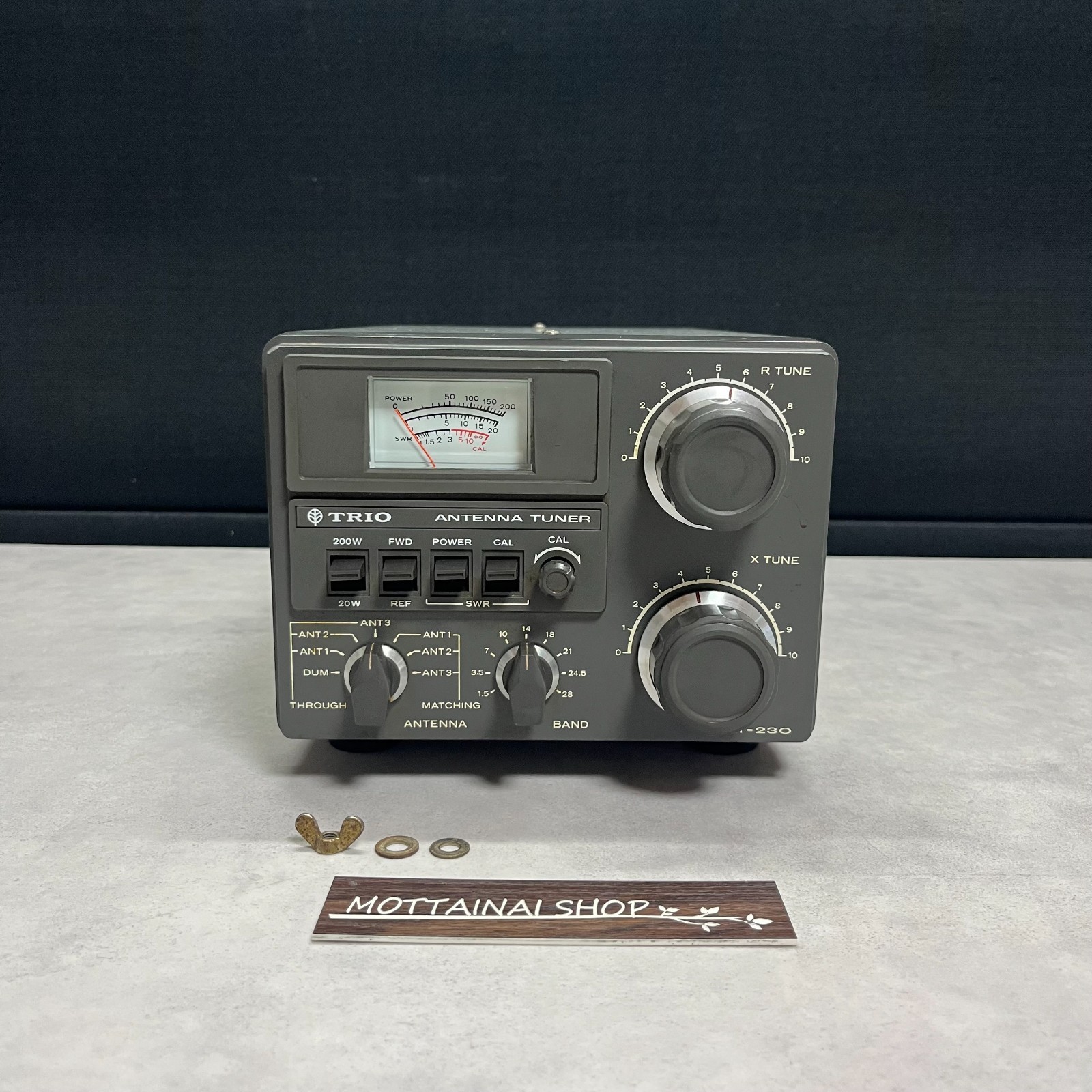
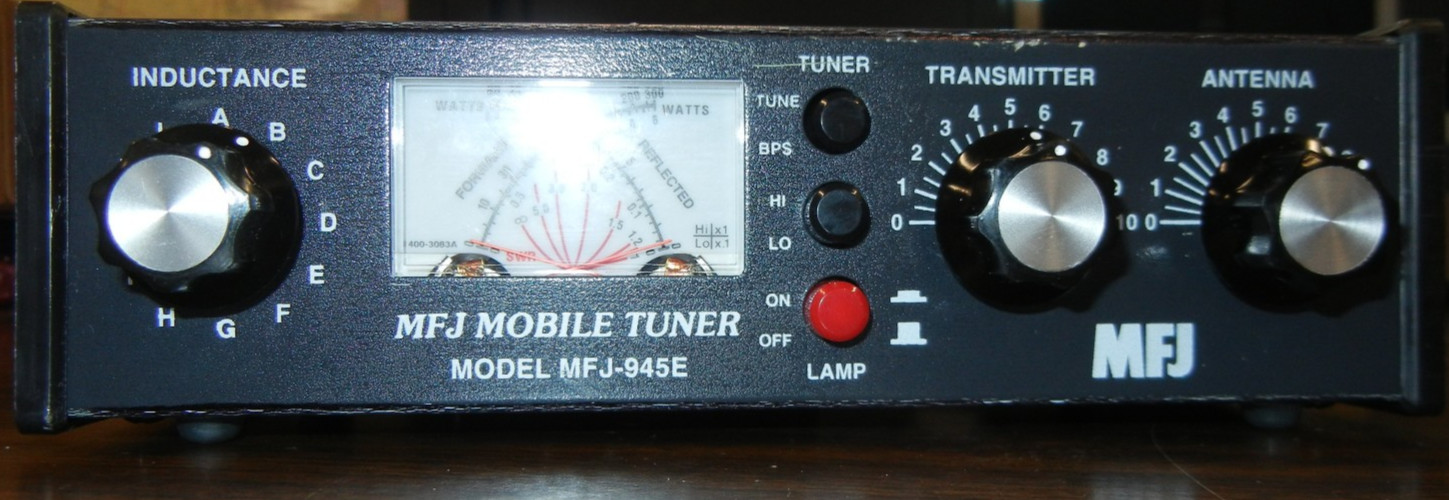
Alternatives to compare
Related searches
What to check before buying
- Measure your operating position: the CAT-300 is a benchtop manual tuner with front-panel controls, so allow clearance for hand access and coax routing behind the radio.
- Check your transmitter's output mode and power: confirm PEP and carrier ratings against the 300 W PEP ceiling before connecting an amplifier.
- Confirm feedline and connectors: 50-ohm coax with PL-259 plugs to both SO-239 ports; for ladder line or balanced antennas, add an external 1:1 or 4:1 balun.
- Verify band coverage against your license privileges: 1.8–50 MHz covers 160–6 m, but 60 m channelized operation and any transverter bands need separate planning.
FAQ
Data sources: eBay / Amazon listings and product attribute feeds. Updated Nov 23, 2026.
Some links on this page are affiliate links. If you buy after clicking one, we may earn a commission at no extra cost to you. This does not change which products appear here or their order. Affiliate disclosure.